
Our heating doesn't breathe
Show 0 more photos Show 3 more photos Hide additional photos
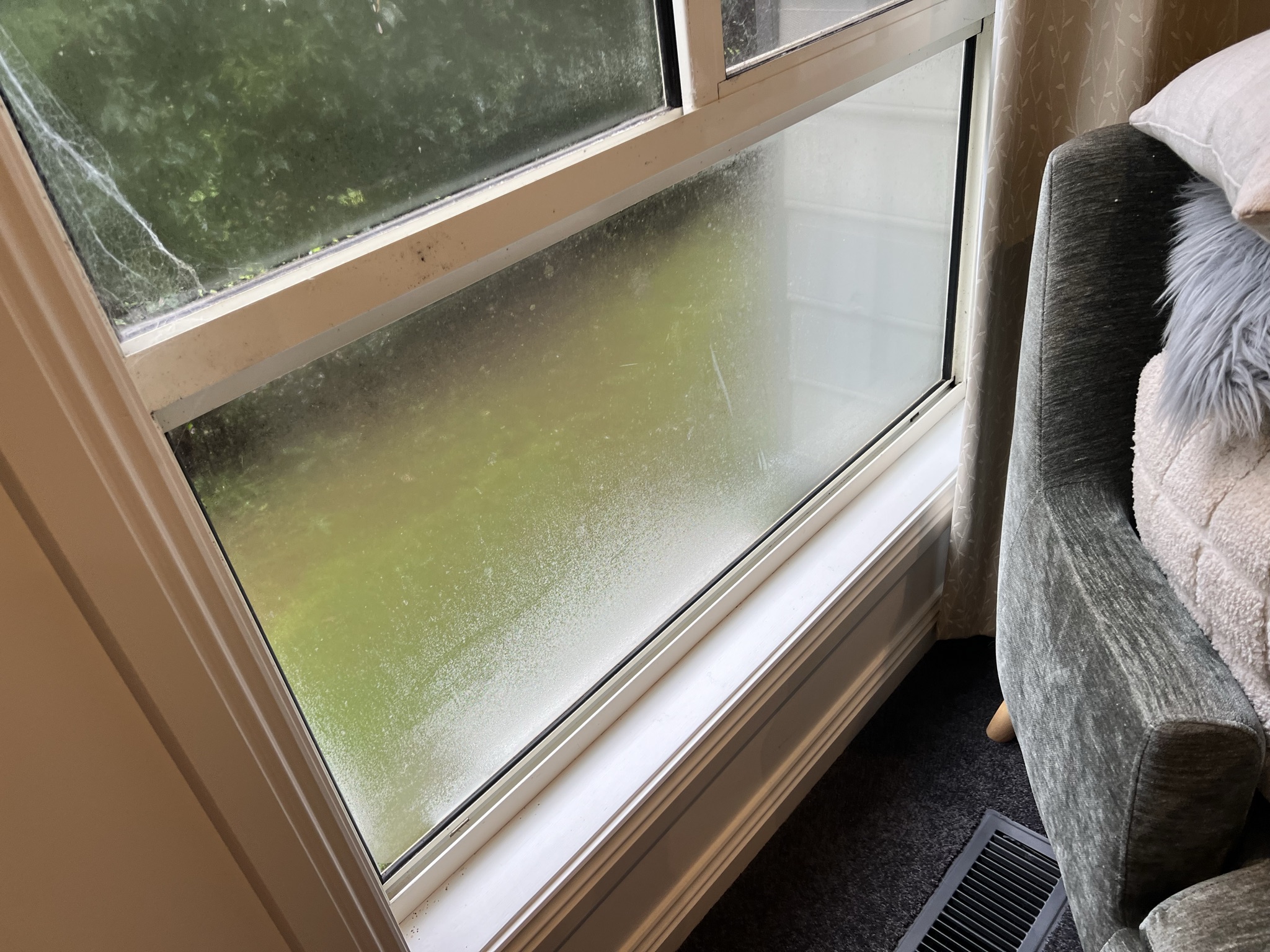
Last post we found the mould. This one is about where the water was coming from.
I assumed the ensuite — showers, obviously. That is a real part of it, though not quite as I pictured. The door stays shut and the fan runs while we shower. It's afterwards that the moisture gets out: the fan goes off, the door opens, and the wet walls, floor and towels carry on evaporating into the house for hours. But it wasn't the whole story, and working out the rest meant unlearning how I thought our heating worked.
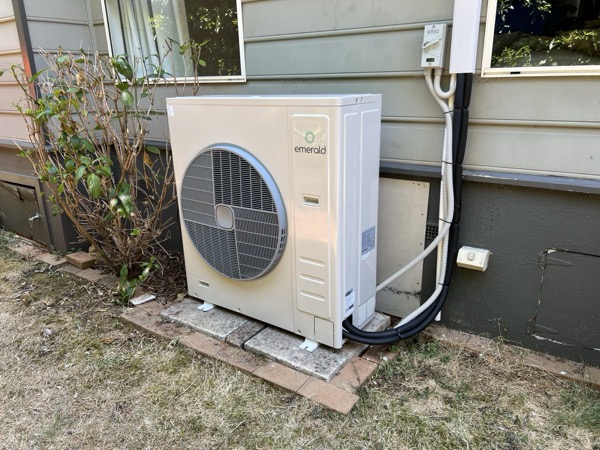
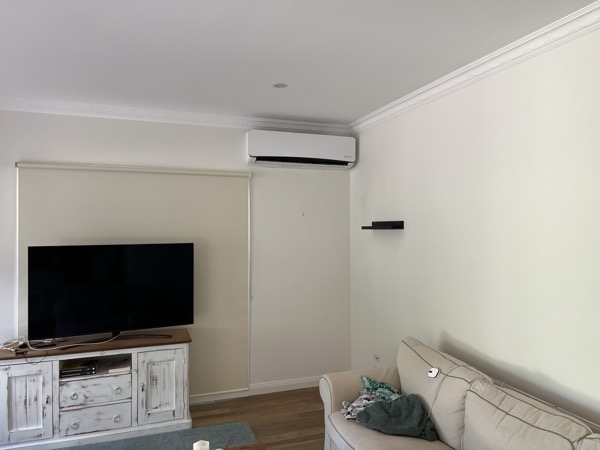
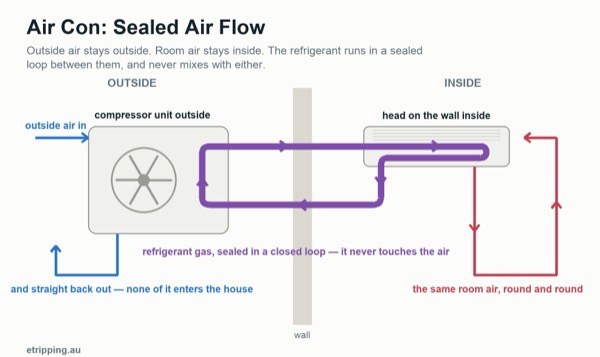
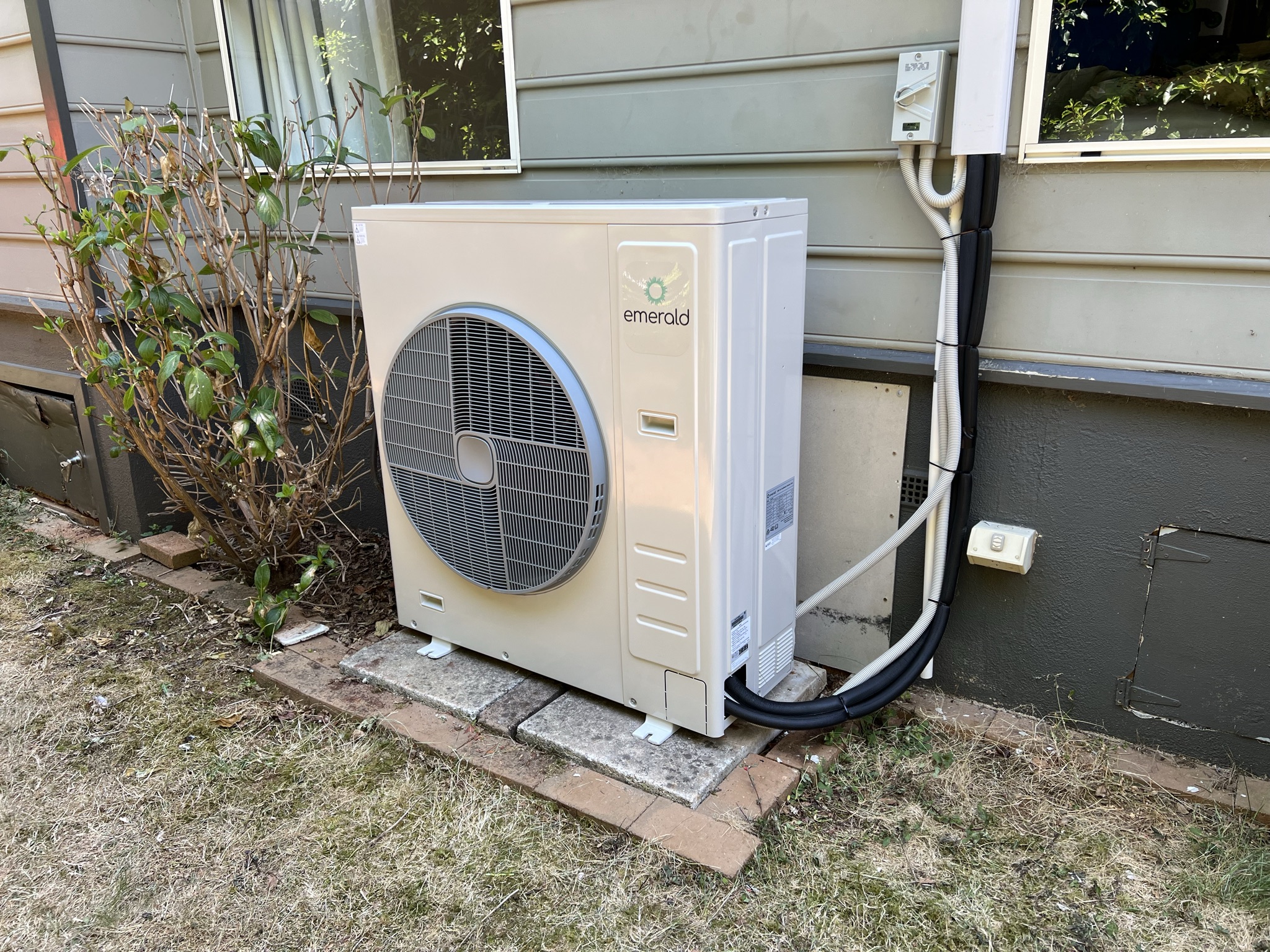
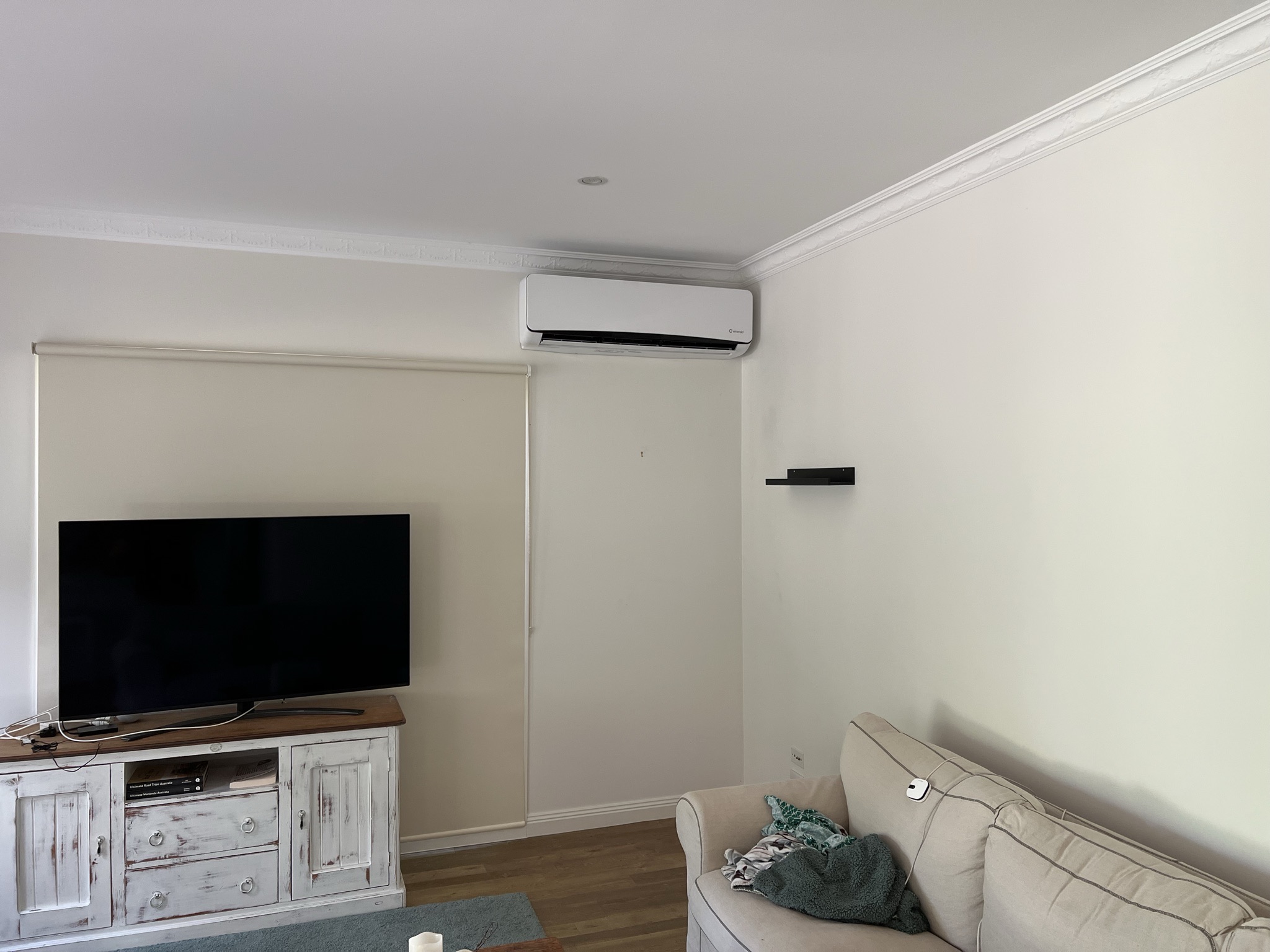
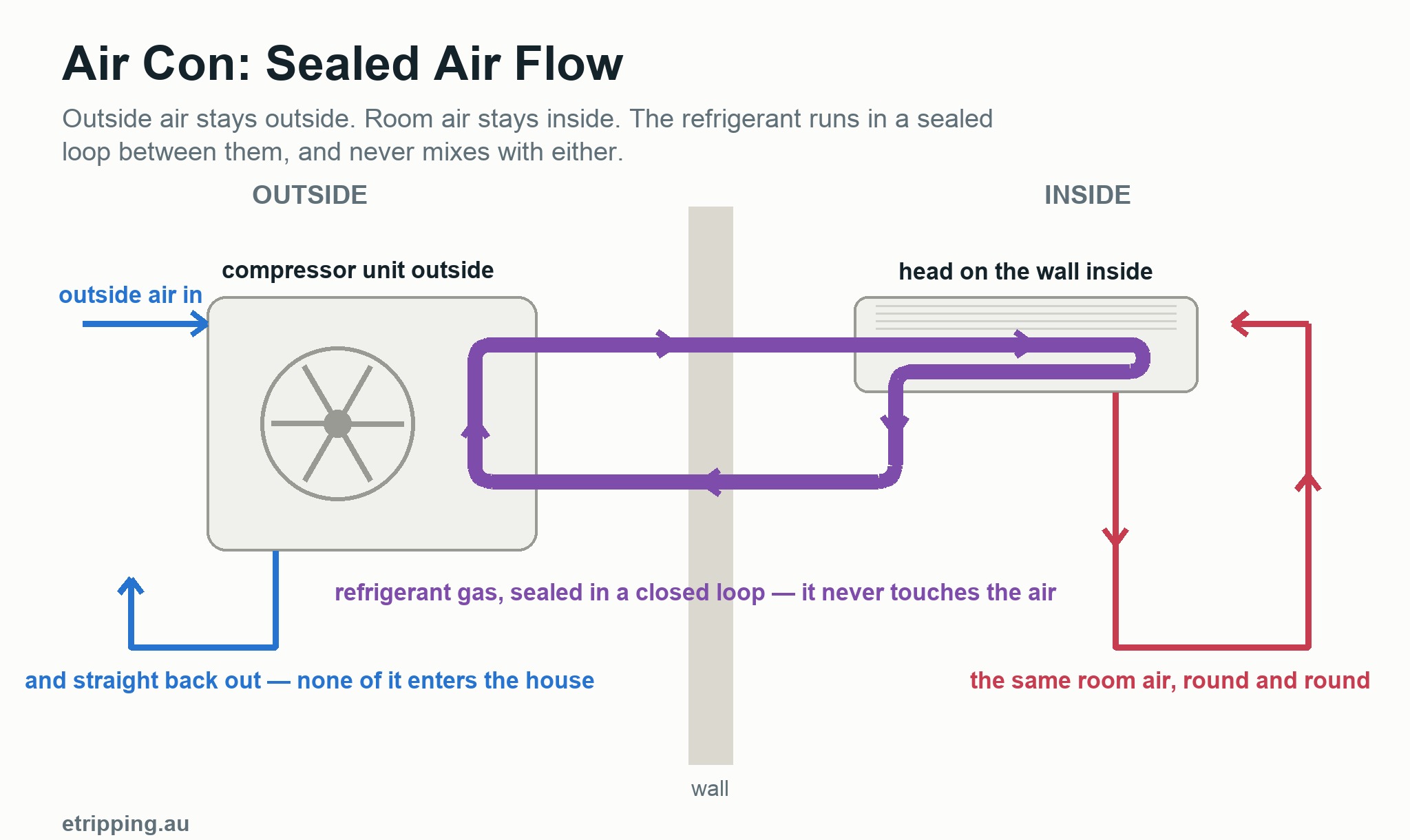
Here's the misconception, and I held it for years. You switch on the air conditioner. The big fan in the unit outside starts spinning. Air blows out of the head on the wall inside. Obvious conclusion: that fan is pushing outside air into the house, warming it on the way in.
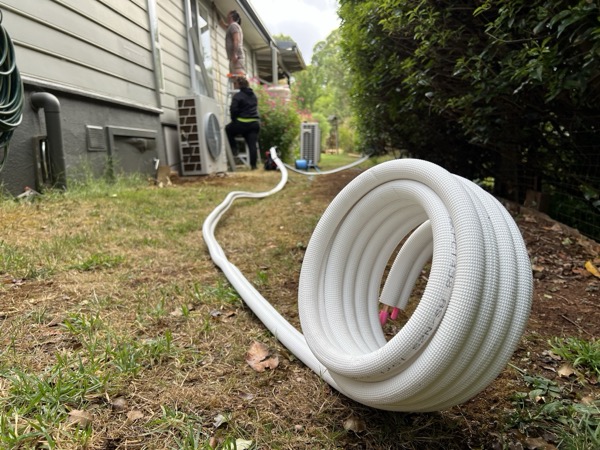
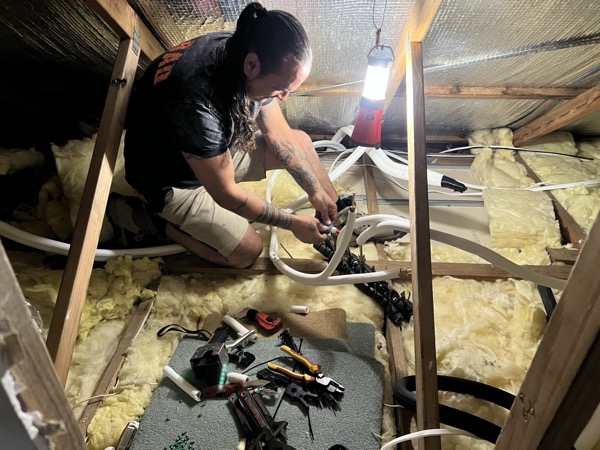
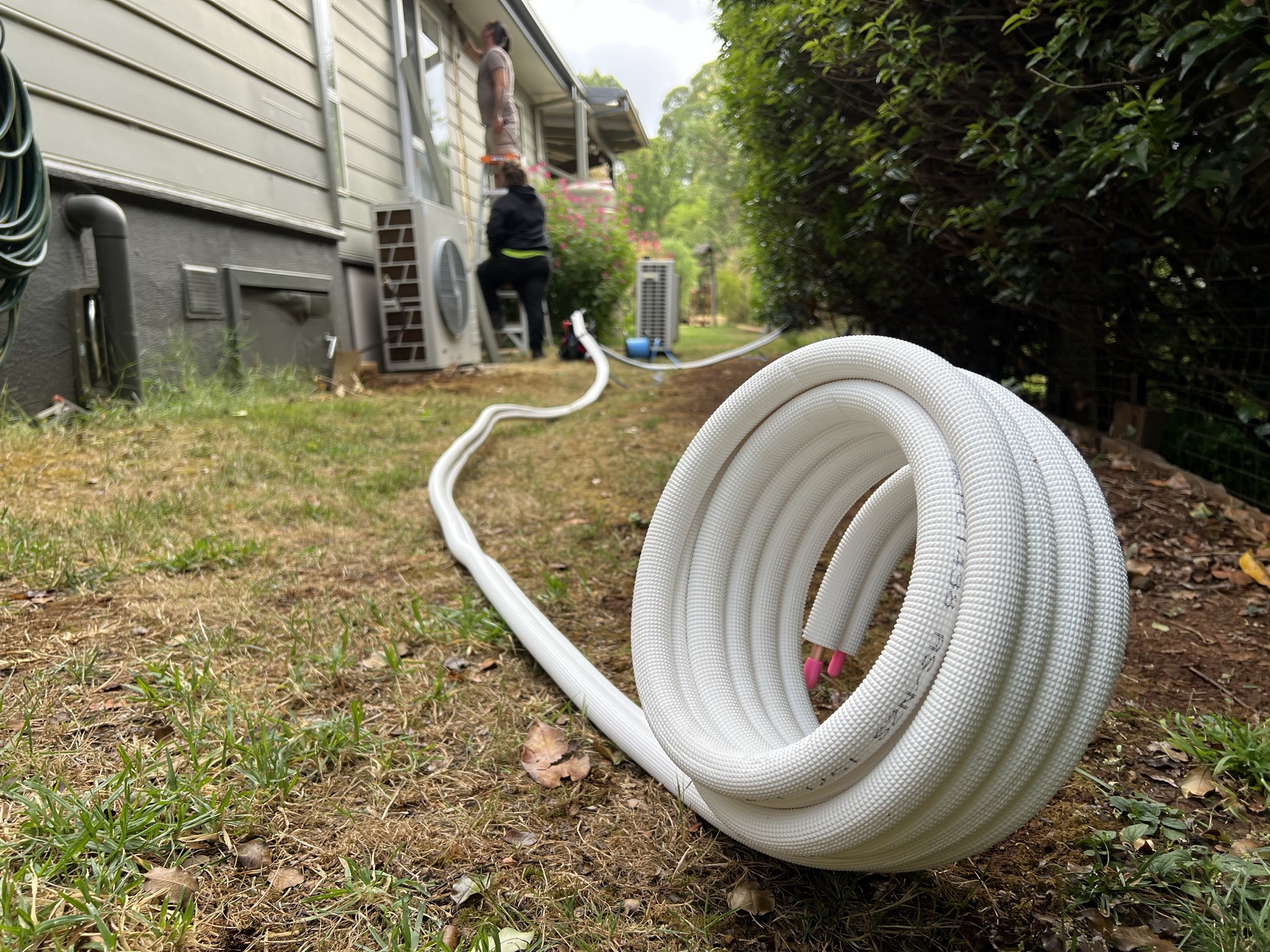
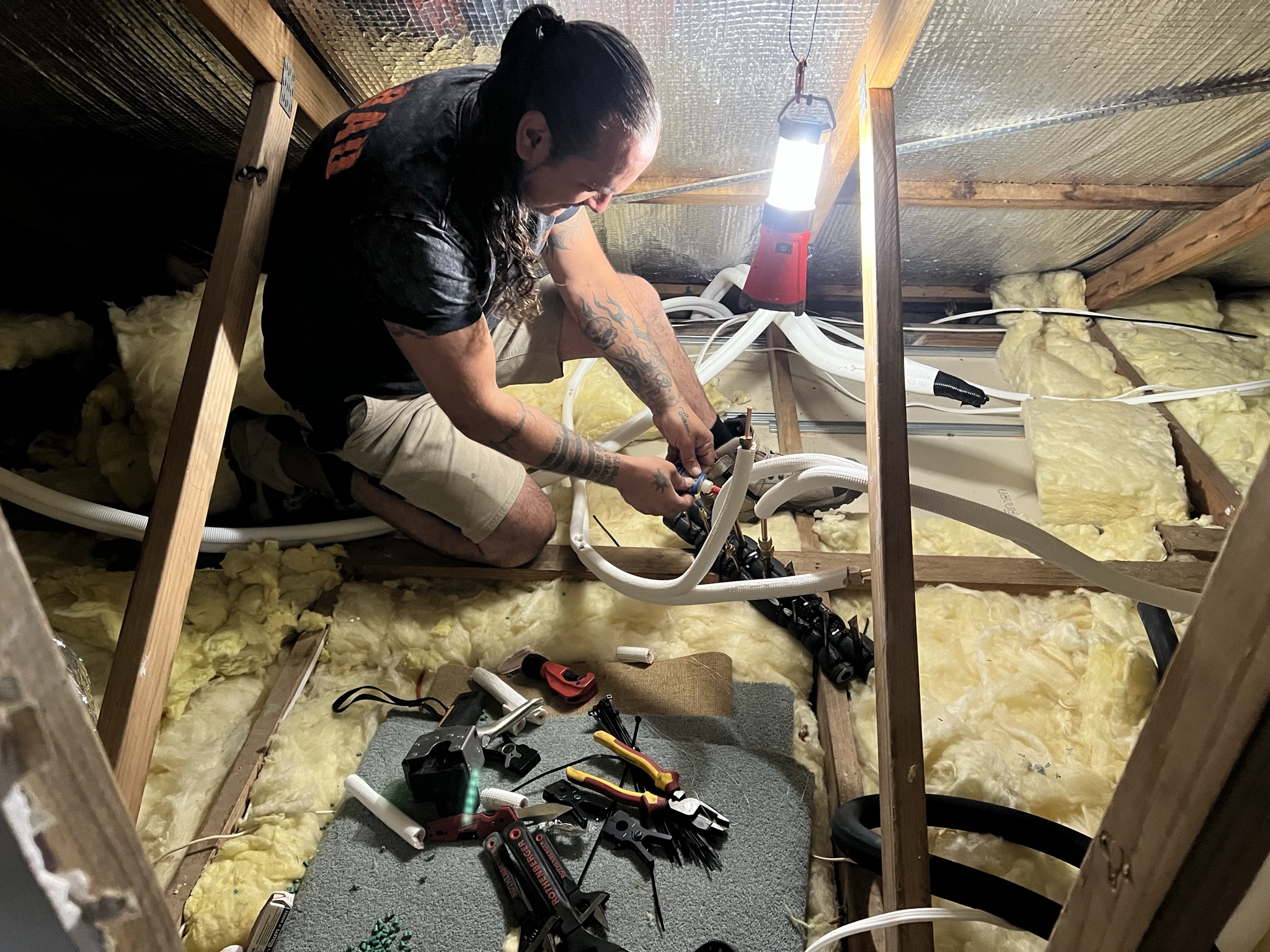
Wrong. No new air comes in at all. The outdoor unit and all that white insulated pipework only move refrigerant gas, and the gas never enters the room. It just makes a hot surface inside, and the head blows the room's own air over it, round and round.
Our old ducted gas heater was leaky, and those leaks happened to let some outside air in. Reverse-cycle doesn't leak, which is part of why it's so much cheaper to run. The catch is that the same air simply circulates in the room. Opening a window even a few centimetres lets fresh air into that loop. I expected that to make the room cold. On a grey August afternoon the lounge still sat on its 19 degree setting with two windows open 5 cm.
Meanwhile the room fills up. Two of us asleep breathe out about half a litre of water overnight. Showers, cooking, drying washing — it all stays in.
So the water had plenty of ways into the air and almost none out.
Does your heating bring in any fresh air?
Coming up
Flushing wet air out of the house — what actually shifts it, and what only feels like it does.
Reading the house: the sensors that were already in every room, telling us this for months.
Did going all-electric cause our mould? What we found under the floor.
Related Posts
- Where this started: Our winter guest: mould 31 Jul 2026
- Next — flushing it back out again: Flushing wet air out of the house 4 Aug 2026
Links
- Tim Forcey on managing moisture in Australian homes, including the rainy side of the Dandenong Ranges: Moisture management and the death of an Aussie icon
Report
Report
Report
Report
Most people seem to think that it’s not a closed loop, but rather an intake, and outlet, with the air heated/cooled along the way, which is incorrect.
Report
https://www.youtube.com/watch?v=NoFxeDflgtg
Report
Report
No duct at all — the fan is part of the ceiling heat lamp unit and just discharges into the roof space. The part of that video I hadn't appreciated is how much airflow a cheap axial fan loses once it has to push through ducting.
Report
Report
Report
Report