
Where does this circuit go?
Show 0 more photos Show 2 more photos Hide additional photos
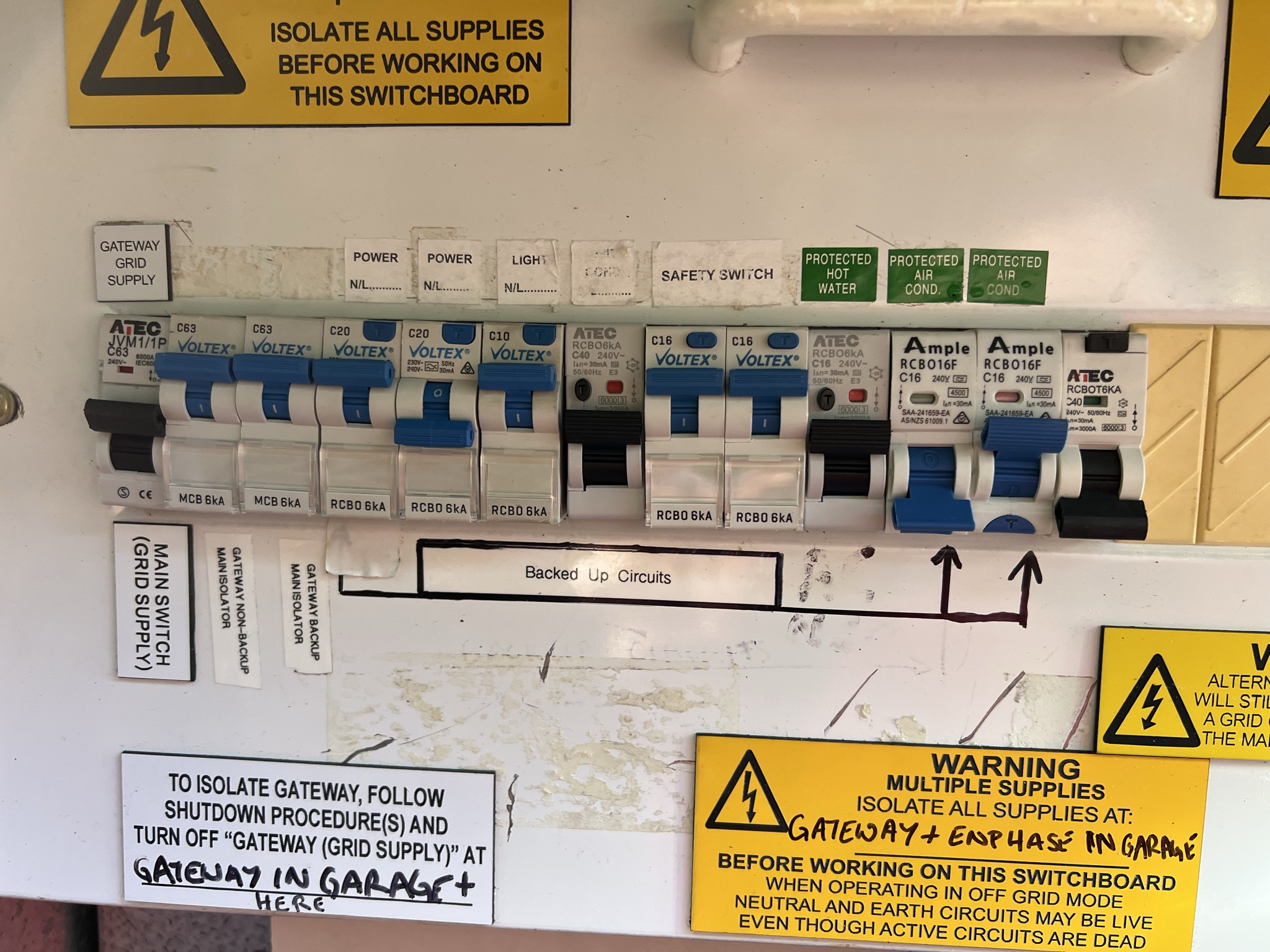
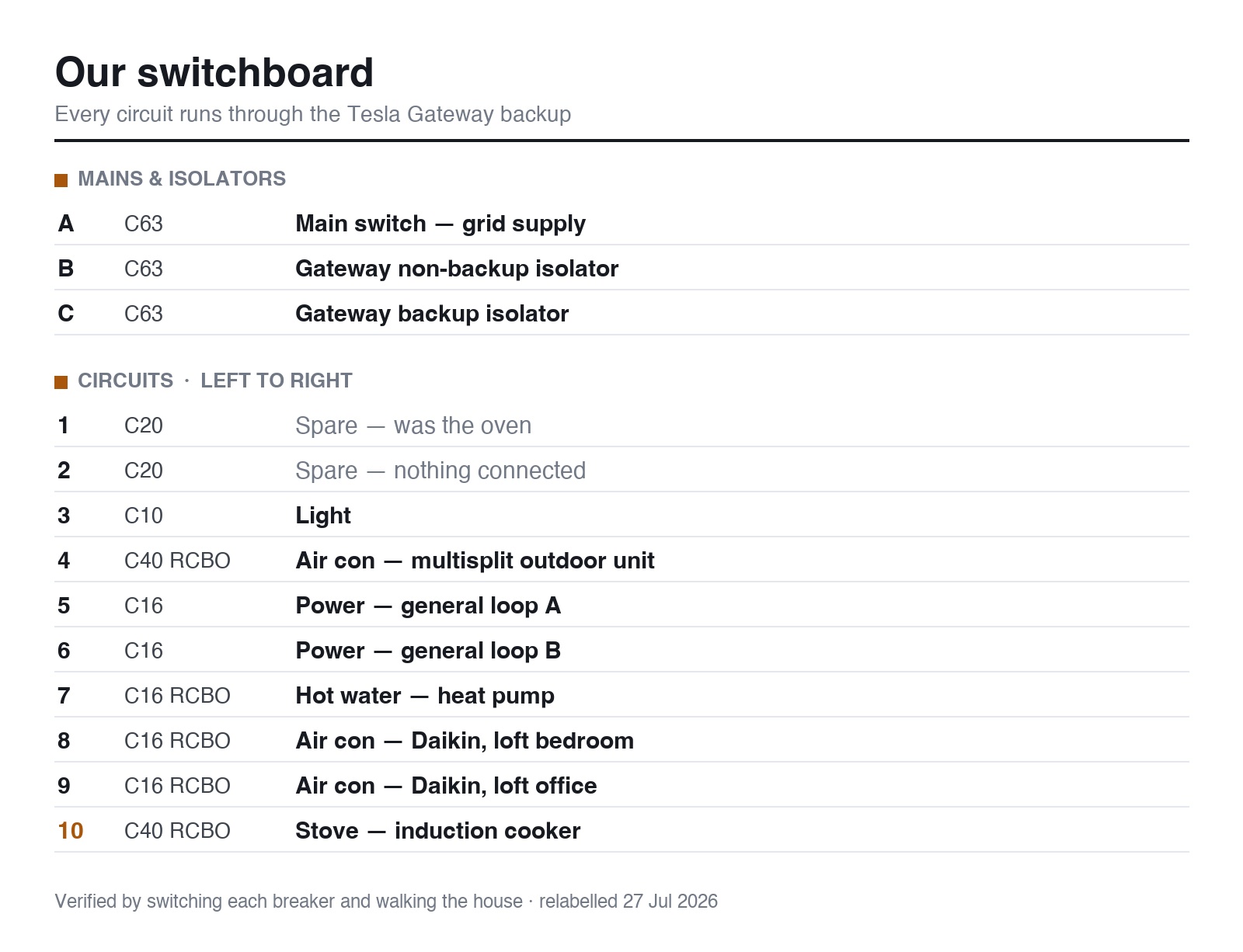
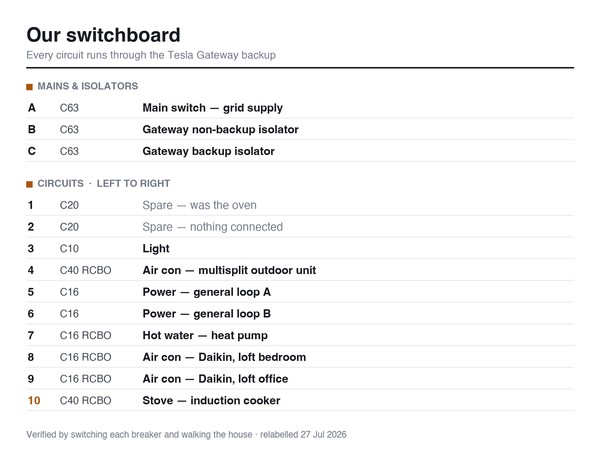
Before anyone could quote to run a new circuit for the oven, I had to answer a simpler question: what is already on our switchboard?
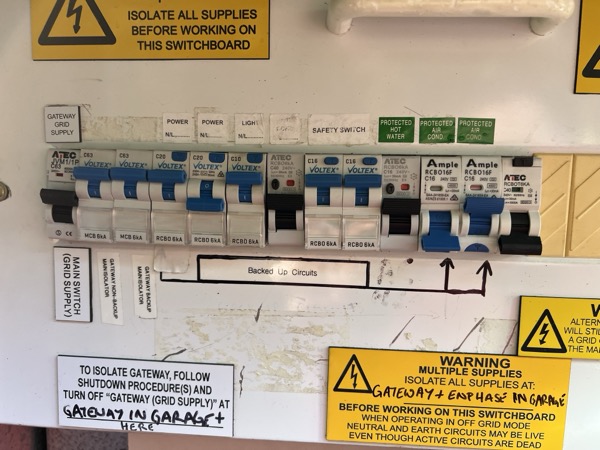
Ten circuits, labels written by different hands over the years, one of them so faded it was unreadable, and no guarantee that any still described what was actually connected. So I did the only reliable thing — turned each breaker off in turn and walked the house to see what stopped working.
The three switches at the left aren't circuits at all. They're the mains and the two Tesla Gateway isolators, because every circuit in this house runs through the Powerwall backup — which is its own story.
The unreadable label turned out to be the air conditioning: a 40 amp breaker feeding the outdoor unit of the multi-head system. The two smaller ones marked "Protected Air Cond" are the floor-mounted Daikins upstairs — one in the bedroom, one in the office.
One 20 amp circuit powers nothing at all. I switched it off and went through the house twice. Everything kept running. My best guess is that it fed the fan of the ducted gas heater we removed in February, and has been sitting there live and useless ever since.
The two circuits marked "Power" aren't what I assumed. I had them down as one for the kitchen and one for everywhere else. In fact they are two general loops, each taking in part of the kitchen along with rooms elsewhere — which is why the microwave and the toaster, a metre apart on the same bench, are on different breakers.
That last one solved a mystery. Every so often the kitchen trips while we're making breakfast. A 16 amp circuit carries about 3.6 kW. Our kettle draws 2.4 kW and the toaster 1.8 kW. Run them together on the same loop and you're asking 4.2 kW of a circuit rated for 3.6. It isn't a fault. It's arithmetic.
Which raises the obvious question: why 16 amps, when the board's own labels suggest these circuits were once 20? I don't know for certain, and I've never seen the cable itself. But the principle, as I understand it, is that a cable's safe current depends enormously on where it runs. The same wire that's fine in open air gets derated once it's enclosed, bundled with others, or wrapped in insulation — the wiring rules halve it outright for a cable completely surrounded by the stuff. Our roof space is full of batts. Somewhere in there is probably the answer, and an electrician could tell you precisely.
The fix costs nothing: keep the kettle on one loop and the toaster on the other. Knowing which outlet belongs to which is the whole trick.
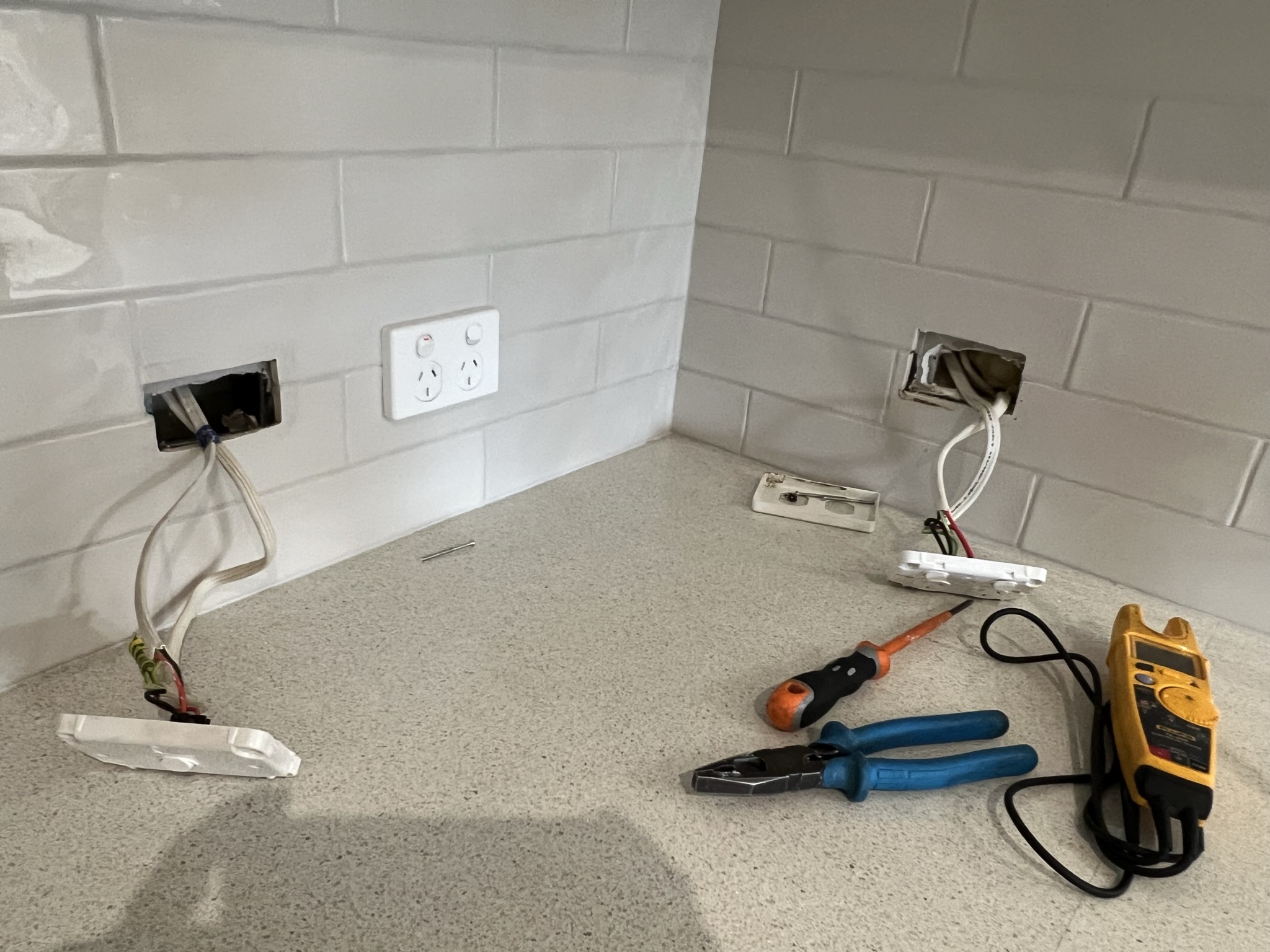
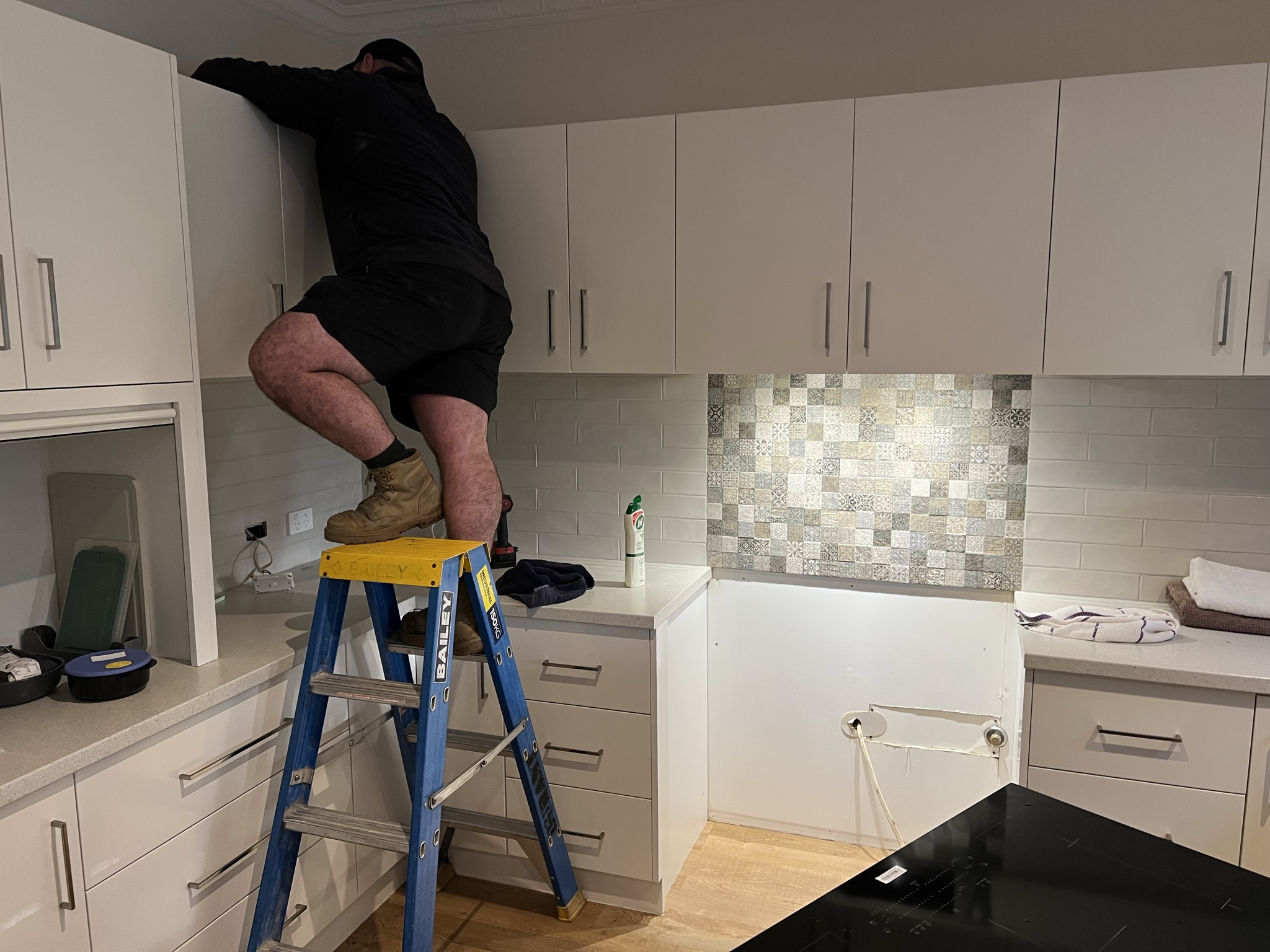
One switch defeated us completely. A lonely rocker on the kitchen wall that, flicked off, disabled nothing we could find — not a light, not an outlet, not an appliance.
Which made it valuable. The cooker needs an isolation switch within reach but not over the hotplates, and the obvious wall is tiled. Cutting a new plate into that splashback would have meant cutting tiles: fiddly, costly, and visible forever. A switch already sitting in exactly the right place, controlling nothing, was the answer. So repurposing it went into the brief that went out with every quote.
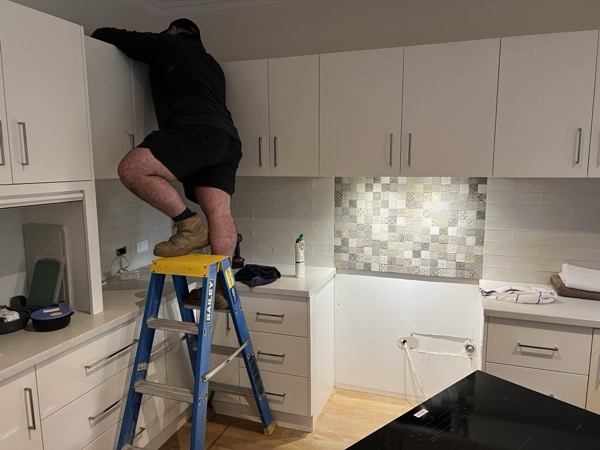
The electricians had it worked out within minutes on install day: it fed a power point on top of the overhead cupboards — a socket we have never used, never needed, and never knew was there. They put a blank plate over it, and swapped the redundant 10 amp switch below for the 40 amp isolator the cooker needed. No tiles were harmed.
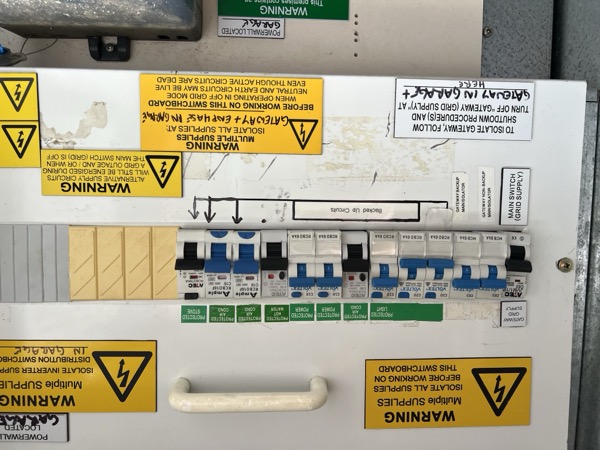
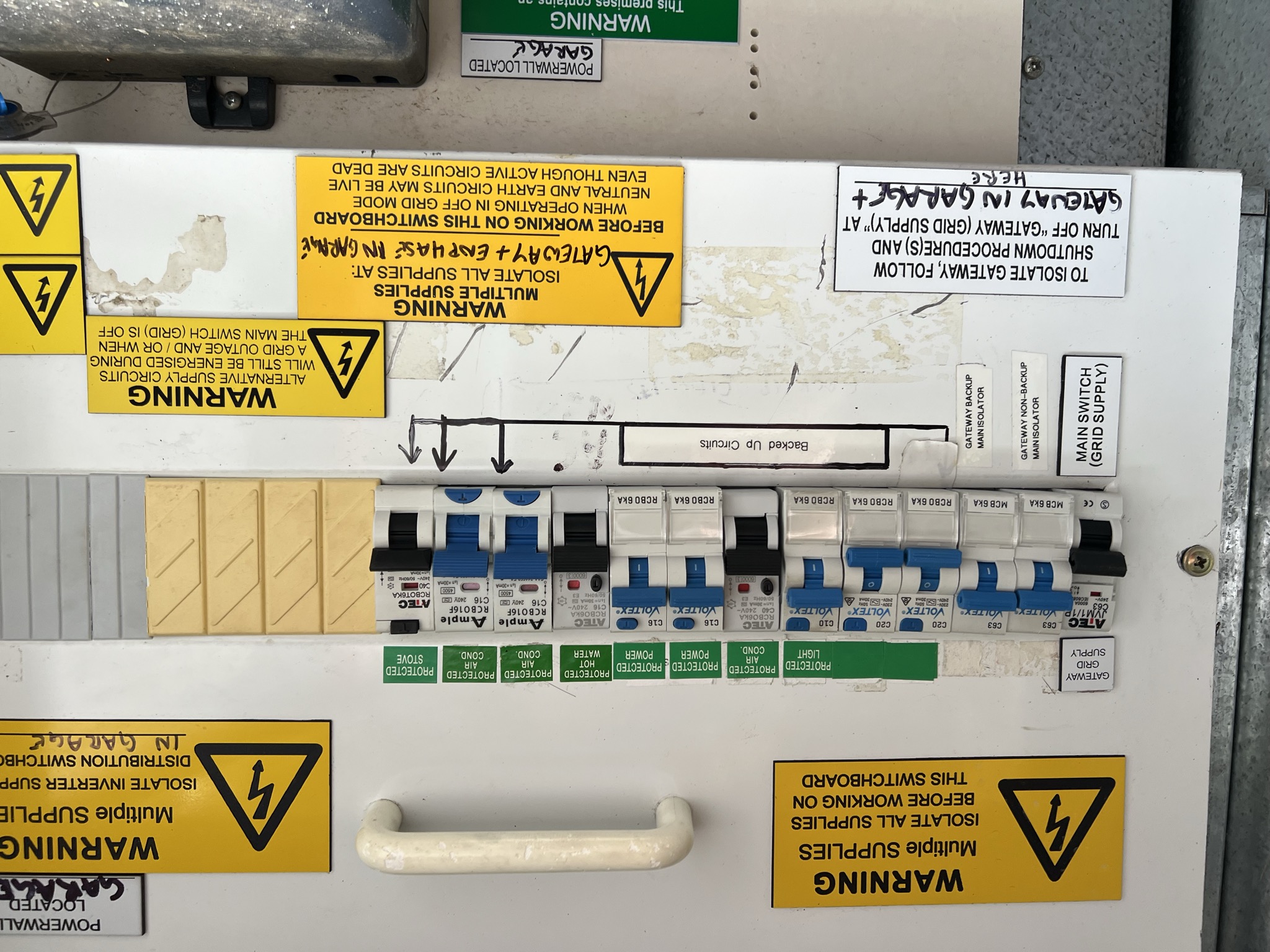
The electrician relabelled the whole board on install day, including a green tag for the new stove circuit — and two deliberately blank labels over the pair that feed nothing. I've added a printed card inside the door as well: every circuit, what it actually feeds, in the order they sit on the rail. The next person to open that door, including future me, gets to skip the walking-around part.
Coming up: installation day. One crew, one visit, and the last gas appliance leaves the house.
Related Posts
- What it cost to add one more circuit to this board Quotes to install an oven and induction cooktop 20 Jul 2026
- Why every circuit here runs through the Powerwall backup It wasn't the grid. It was me. 21 May 2026
- The ducted gas heater we removed in February Goodbye gas — disconnecting the ducted heating 4 Feb 2026
- Installation day, when the mystery switch was solved Installing our induction stove 27 Jul 2026
- The oven all this was for Oven bought in March, arrived in July 12 Jul 2026
Report
Imagine all those dormant brain cells activated in troubleshooting (tracing) all the circuits. Not to mention the legs walking back and forth... back and forth... back <thwack!> "ow". I'll go now. :)
Report
Report
Report
Report
Report
Report
Report
Was 20A now 16A as somewhere in your roof the cable now has insulation over it which derated the cable.
Circuit breakers have tripping curves and a cold breaker will run at 180% of its rated load for 500seconds - call it 9mins.
180% of 16A =28.8A = 6624W
Report
Report
Report