-
 HQ
HQ
 HQ
HQ
 HQ
HQ
It wasn't the grid. It was me.
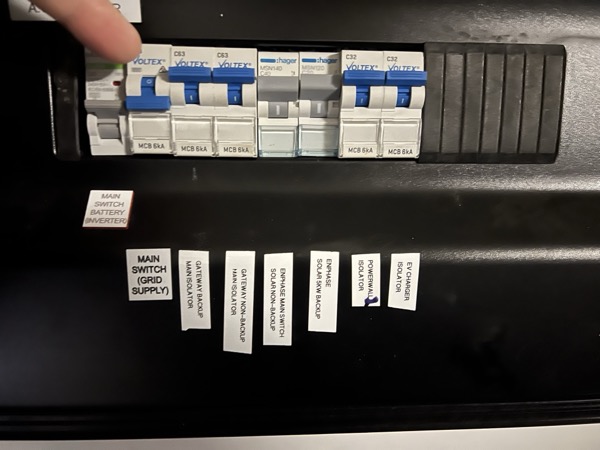
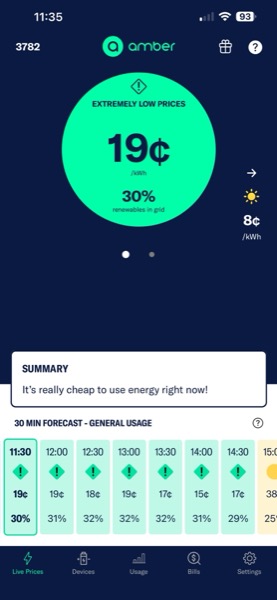
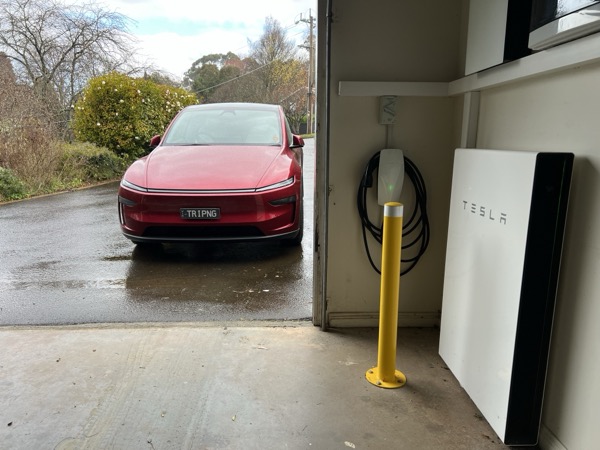
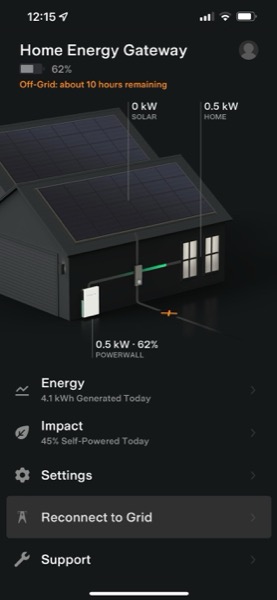
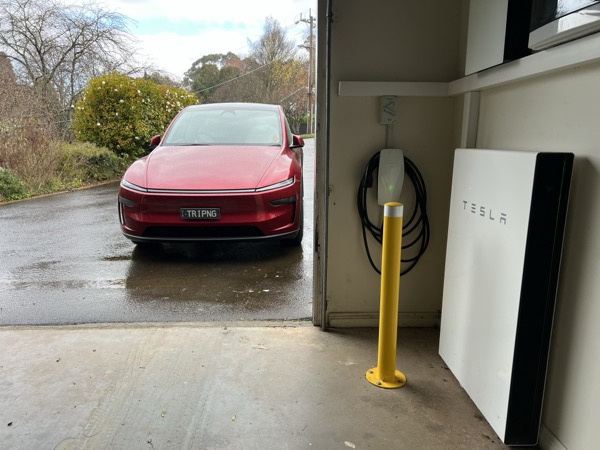
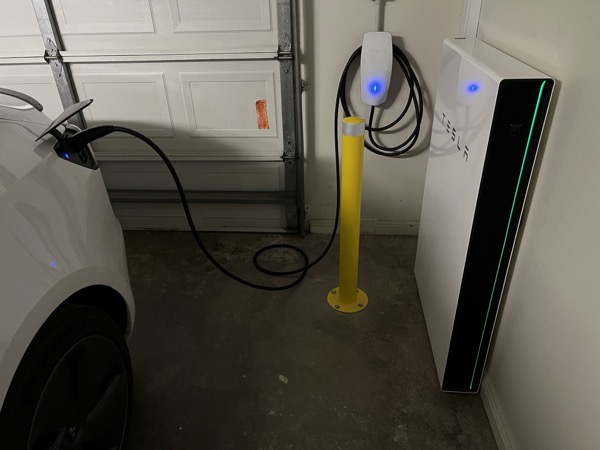
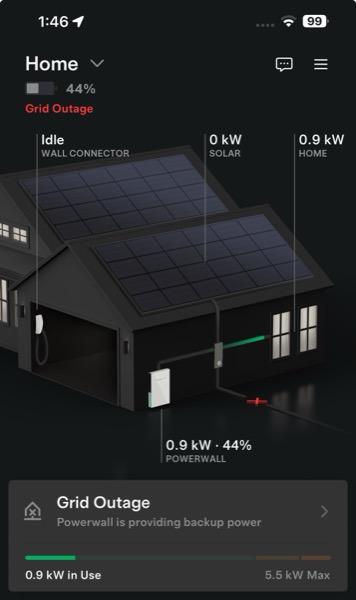
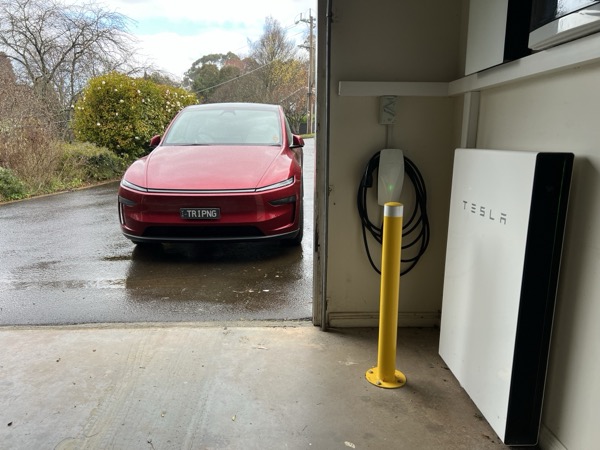
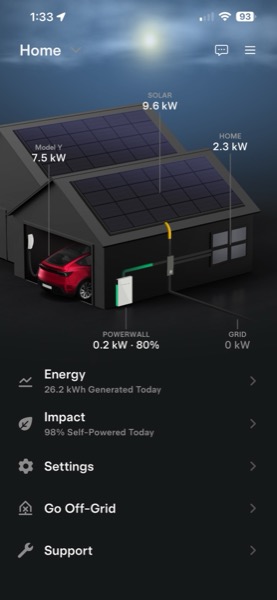
The Tesla app told me the grid was down. The Tesla app was wrong... kind of. It was an overcast morning in a low-solar week, and our Amber Electric app was lit up green: 19¢/kWh, 30% renewables — "really cheap to use energy right now". So, I set the house battery and the Tesla EV to charge together, from grid power, while we waited for the sun. A few minutes in, the phone pinged: "Power lost while charging — Charging stopped, check power source and charging equipment." The Tesla home view confirmed it — "Grid Outage. Powerwall is providing backup power. ~3.3 backup hours remaining." I checked our circuit board. Nothing tripped. Went online to AusNet's outage page — nothing reported anywhere near us. Their fault-finder asked if the meter display was lit and we'd paid the bill: yes, and yes. Verdict: "It looks like there might be a fault on your property. You'll need to contact an electrician." That's when I remembered the other set of breakers — the ones inside the Tesla Backup…
-
 FB
FB
 HQ
HQ
 HQ
HQ
Adding a second battery — Tesla finally makes it possible
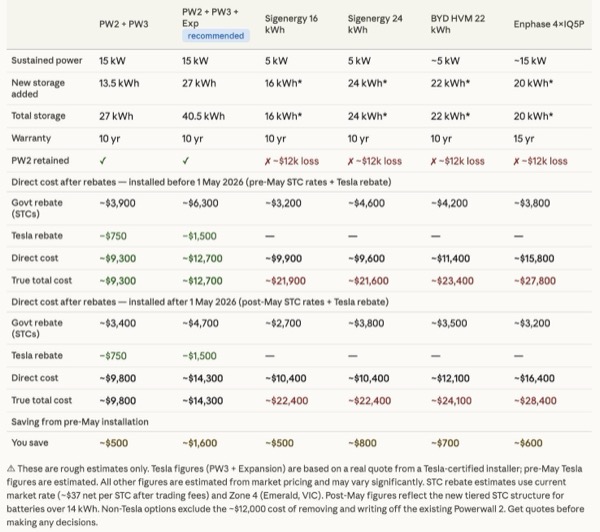
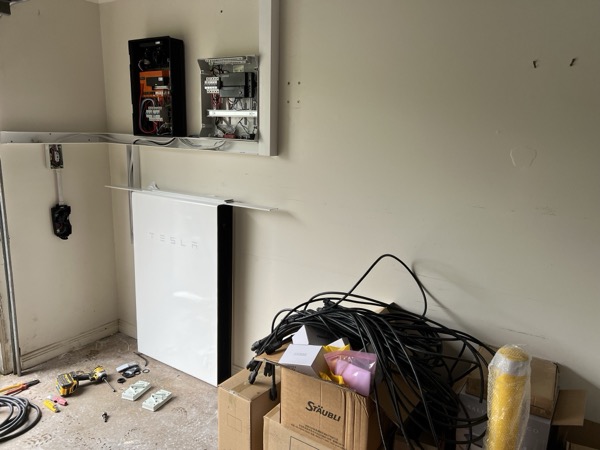
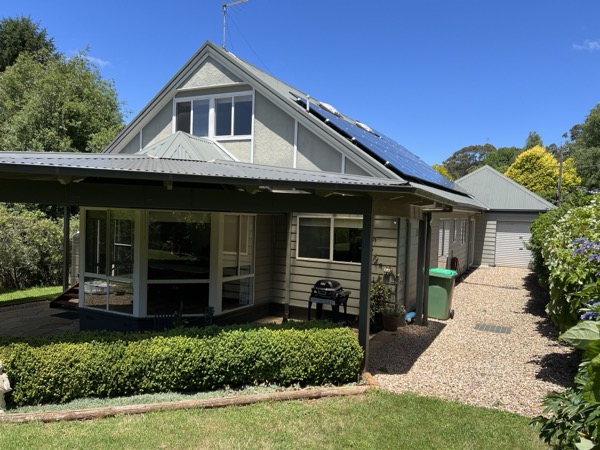
When Lightning Energy installed our Powerwall 2 back in December 2023 it was great. Paired with our 13 kW Enphase/Jinko solar system and 10 kW inverter, it's been handling our fully electrified home in Emerald pretty well — five reverse-cycle ACs, heat pump hot water, EV charging, and grid outages lasting up to nine days. But as we've added more loads, I've been thinking about expanding battery storage. There was a problem, though. The Powerwall 2 is no longer CEC-approved for new installations in Australia. Tesla stopped taking orders for it in late 2024/early 2025, and as of January 2026 it's no longer on the Clean Energy Council approved list. So you can't add a second one. And until very recently, the Powerwall 3 — Tesla's current model — was completely incompatible with the Powerwall 2. They couldn't talk to each other. That meant anyone with a Powerwall 2 who wanted more storage faced a painful choice: rip out the existing battery and start fresh with new hardware. For me, that…
-
 HQ
HQ
 FB
FB
 HQ
HQ
Heat pump testing — how fast does it heat?
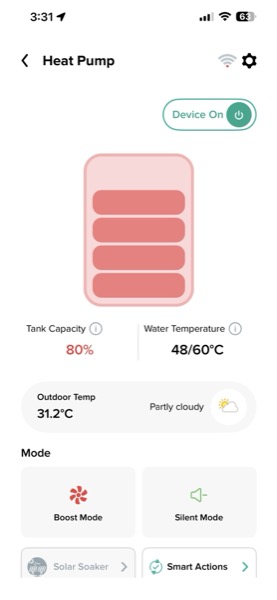
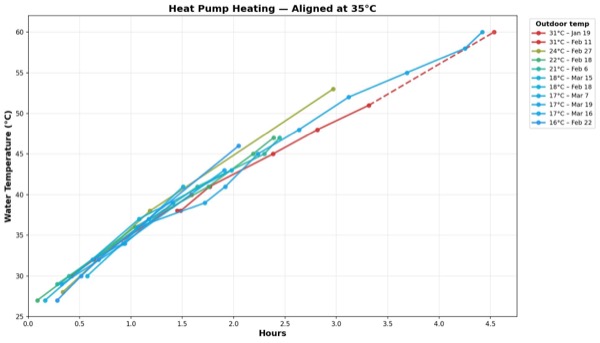
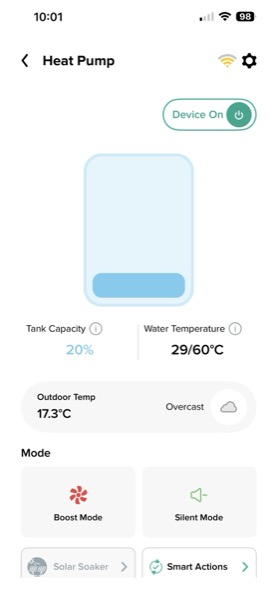
In my December post about our heat pump installation, I mentioned that one of the reasons I chose Emerald was the integrated app. It shows the tank capacity, water temperature, outdoor temperature, and lets me turn it on and off or activate Boost Mode remotely. I've since used it to answer a question: how long does it actually take to heat the water, and does outdoor temperature make a difference? Over the past couple of months, I've been taking semi-random screenshots of the Emerald app at intervals through the day, tracking the water temperature as it heats from "Low" (around 25–30°C) up to the 60°C target. I did this on 11 different days, with outdoor temperatures ranging from about 14°C to 32°C. I then used AI (Claude, by Anthropic) to read all 87 screenshots, extract the data, and plot it on a chart. The chart shows each day's heating curve overlaid, with the lines colour-coded by outdoor temperature — red for hot days, blue for cool days. We might expect to see the warmer days…
-
 HQ
HQ
 HQ
HQ
 HQ
HQ
Goodbye gas — disconnecting the ducted heating
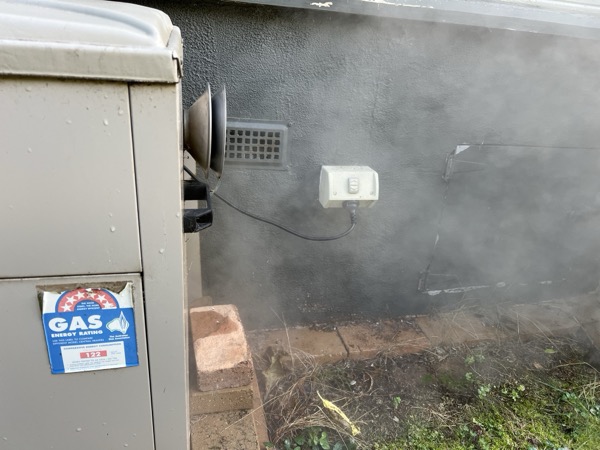
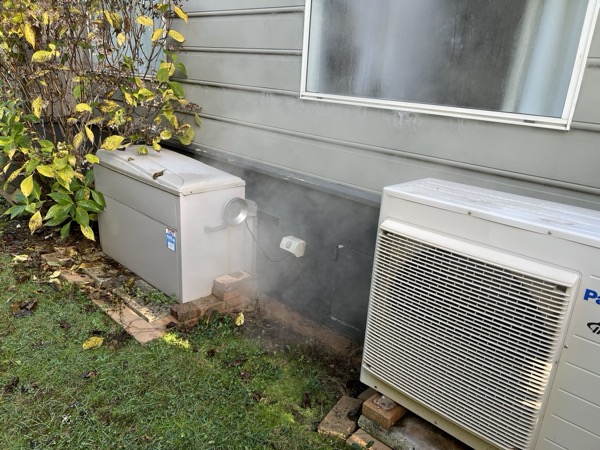
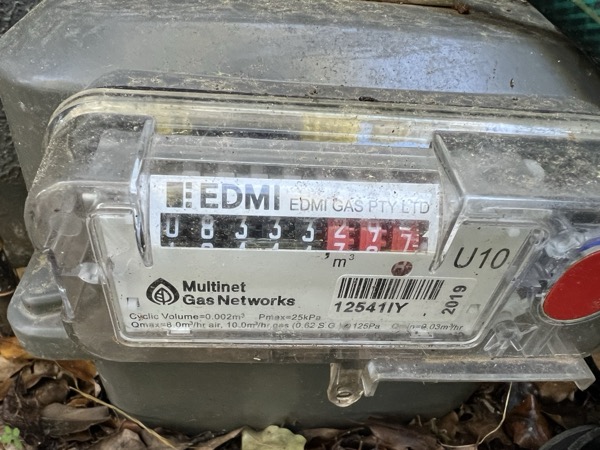
Goodbye gas! I finally organised disconnecting the ducted gas heating at our home. If only we could see the burnt gas pouring into the air, all the time, and not just when the condensation highlights it (as in the photos). Pumping carcinogens and greenhouse gases into the air that we breathe. It’s nuts. It was costing us up to $528 per month to run the heating in winter. Our replacement air conditioning will be closer to free, thanks to our solar and battery. We recently also replaced our gas hot water with a heat pump. Our one remaining gas appliance is our stove top. Once that’s gone, we will save $35 per month just for the connection fee. And no more gas! We’re replacing the gas heating with some split air conditioners. For those who might say “what about in a blackout”? Note the power point connection on the old gas heating. Our old gas hot water heat pump had one too. They both needed electricity to run. In fact, in addition the gas consumed, the heating used about 1kW of…
-
 HQ
HQ
 HQ
HQ
 HQ
HQ
First Tesla service call: a new wheel
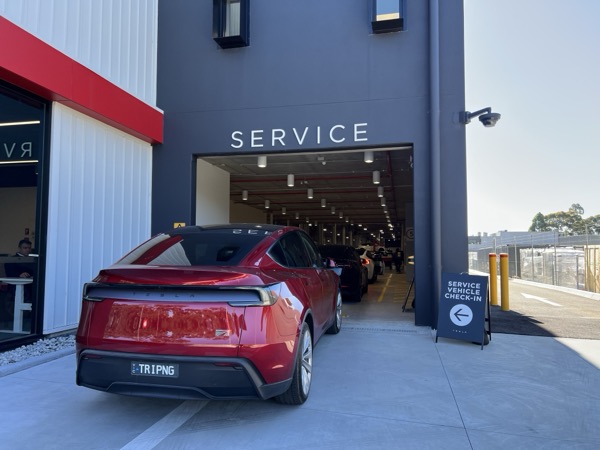
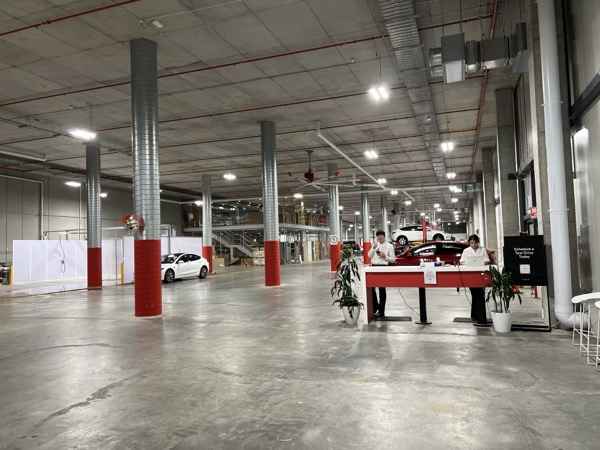
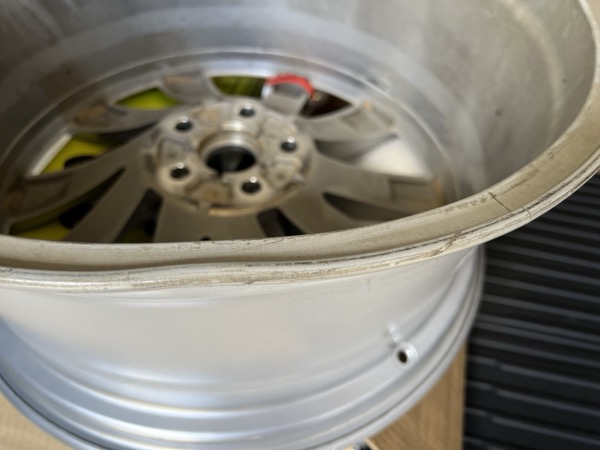
First service call for our Tesla Model Y. Replacing our loaner wheel with a new wheel. As you can see in our posts from a few weeks ago, we hit a pothole, damaging our left rear wheel. At the time, we only knew that we had a slow leak. We logged the problem in the Tesla app. They arranged for roadside assistance to come to us, in about an hour, to install a loaner wheel, and take ours away to diagnose. Today, Tesla replaced the loan wheel with a new wheel, costing a whopping $1319. I asked them to clean the damaged wheel and put it in the back of the car. In the photos, you can see the buckle and crack. I am wondering if it is fixable. When I booked this service in the app, I also asked them to fix the water in the light bar, and some issues with the steering wheel buttons. They replaced both. I’ll discuss the steering wheel buttons in a separate post. All covered under warranty. I had a bit of trouble figuring out where to leave the car. Several after me also mistakenly parked in…
-
 HQ
HQ
 HQ
HQ
 HQ
HQ
Oli burger and FSD on the Hume Highway
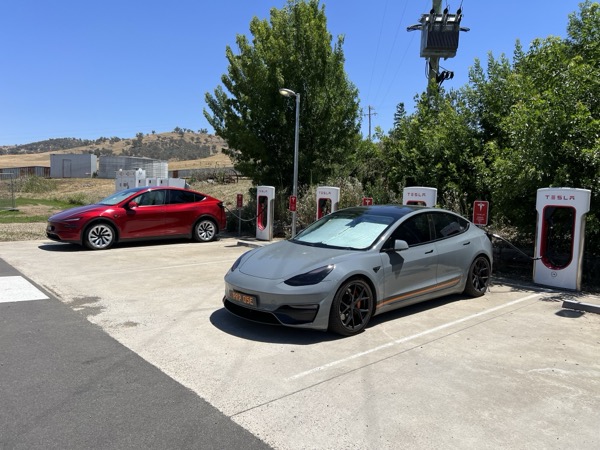
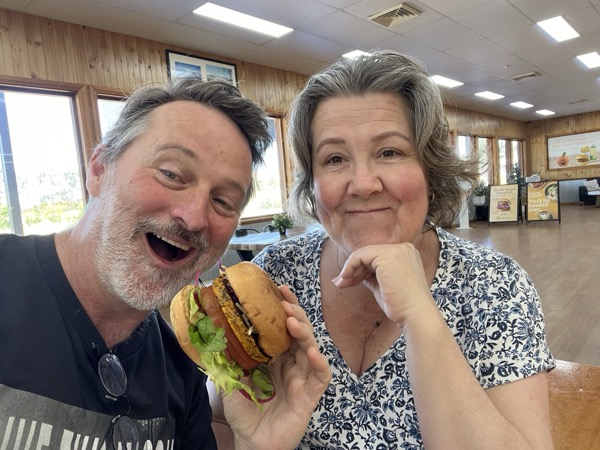
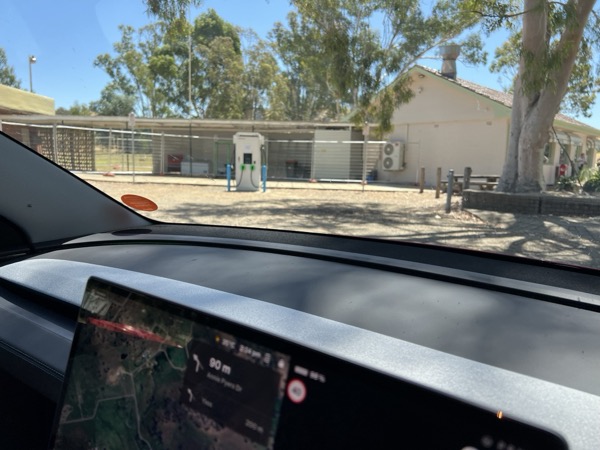
Lunch stop at Oliver's, just outside Gundagai. I recommend the Oli burger 🍔. Tesla Model 3 with stripes parked near us. FSD along most of the Hume Highway. It does a great job, and avoids human fatigue. A few complaints, though, including it repeatedly thinking that the speed limit is 100, even when it’s actually 110 (pictured). Occasionally it dropped to 80 or 40, presumably after seeing some random sign off the highway. Pretty good driving efficiency with FSD, too, about 14kWh per 100km. See screenshots.
-
 FB
FB
Tech AU picked up our home-battery tips
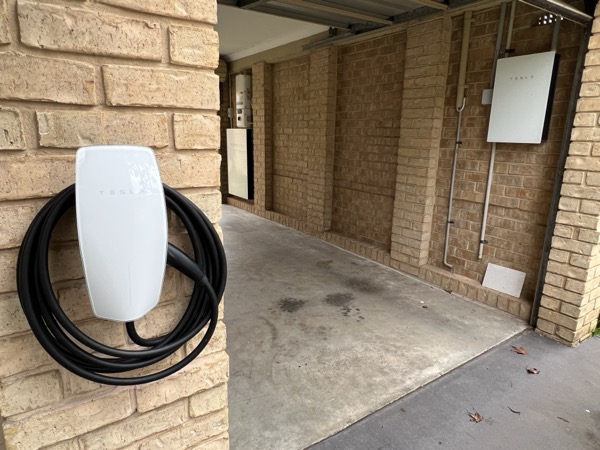
Tech AU just published an article based on our recent post listing recommendations for home battery installation.
-
 HQ
HQ
 FB
FB
 HQ
HQ
What to ask for in a battery installation
I suggest getting your installer to agree in writing that your battery installation will include: 1. Remote control via an app and/or website to monitor your battery and house power. 2. During a grid outage, the battery should provide backup for everything you need. 3. During a grid outage, solar continues to provide power. 4. The ability to curtail export of power to the grid when pricing is negative. 5. Compatibility with Amber Electric, if you might want to use them as your energy retailer. Let’s look at each in detail: 1. Using an app or website, you can: 1. Monitor power in and out of your battery, house and grid connection, instantaneous, daily and historical. 2. At any time, set your battery to a minimum charge percentage. 2. In the event of a grid outage: 1. The battery will switch over automatically. The installer should test it and show you. 2. The battery will power all of your home, up to the battery’s maximum power (which should be at least 5kW). 3. If you have three…
-
 FB
FB
 FB
FB
 FB
FB
What do the kW and kWh measurements mean?
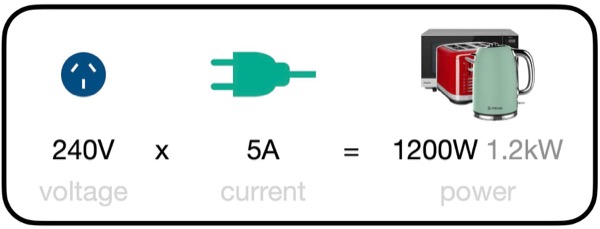
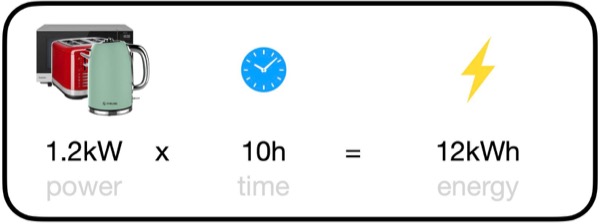
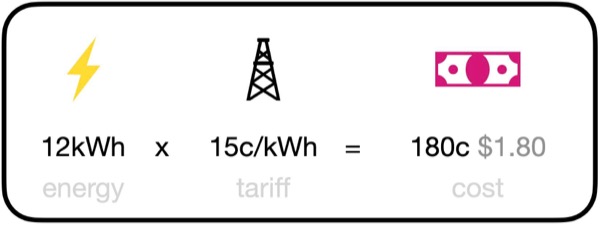
What do all the electricity measurements mean? 1. Australian household electricity runs at about 240V “volts”. All your power points and devices are 240V. This is basically a measure of the force used to push the electricity. 2. The “current” is basically the throughput of electricity, measured in Amps. It varies for different devices. A modern LED light bulb uses less than 0.1A (Amps). A toaster or heater will use around 8A. The typical maximum allowed by a standard power point is 10A. 3. The total power of the electricity is measured in watts. We multiply the volts by the amps (voltage x current) to get the watts. For example, if your appliance uses 5A at 240V, then that’s 5 x 240 = 1,200 W, which is 1.2kW (kilowatts). A light bulb uses less than 0.1kW. 4. The total energy used by a device is calculated as the power x time. For example, if you use an appliance running at 1.2kW for 10 hours, then it uses 1.2 x 10 = 12kWh (kilowatt hours). A light bulb could run for days on the…
-
 HQ
HQ
 HQ
HQ
 HQ
HQ
Home battery introduction
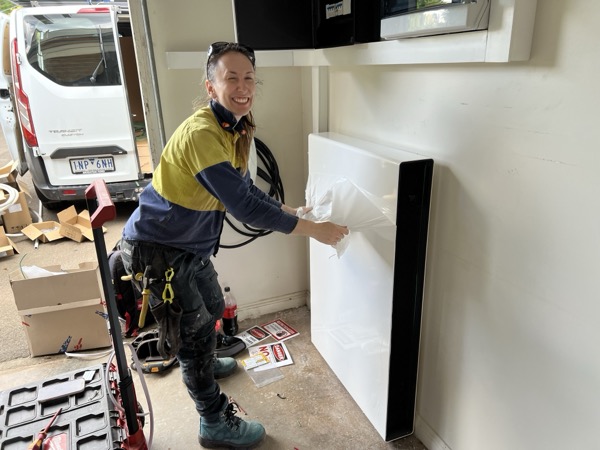
Are you considering a battery for your house? Here is a basic introduction, based on our experience. I hope it’s helpful. Please comment about any errors, omissions or questions. 1. Why is there more talk lately about getting a battery for your house? 1. As of July 1 this year, the federal government will pay for 30% of your home battery purchase. This makes it 30% cheaper to buy one. 2. What’s the purpose of a house battery? 1. A battery provides power to your house, as electricity. 2. It can power anything in your home that runs from electricity, including your fridge, lights, power points, TV. 3. It can keep your house appliances running when there is a grid outage (a “blackout”). 4. If you have solar panels, a battery can store the excess power generated during the day, so you can use it at night to avoid paying for electricity. This is why it is often called a “solar battery”. 5. You can also charge a battery from the grid when electricity is cheap, and use it when electricity is…
-
 HQ
HQ
 HQ
HQ
 HQ
HQ
Solar, battery and electrification — series intro
A few neighbours and friends have asked us lately for advice about solar panels, house battery, EVs etc. Here’s our real life experience, starting a series of posts on different topics. We installed solar and battery when we moved into our house (Emerald, Victoria) about two years ago. We already had an EV (electric car). This week, we finally got around to replacing our gas hot water with an electric heat pump. Next month we’re replacing our gas ducted heating with a multi head split air conditioning system. Overall, our solar and battery provide more electricity than we use. We’re also connected to the electricity grid so we can import when we need more, or export when we have a surplus. We aim to produce all the power that we need. On the rare times that we import electricity from the grid, our retailer bills us. More often, we export our surplus electricity to the grid, for which they give us a credit. Overall, we have more credit than debits, so we don’t have to pay anything. All…
-
 HQ
HQ
 HQ
HQ
 HQ
HQ
Heat pump installation
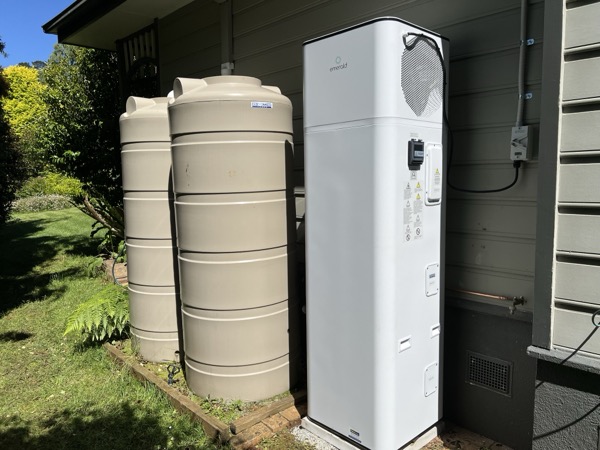
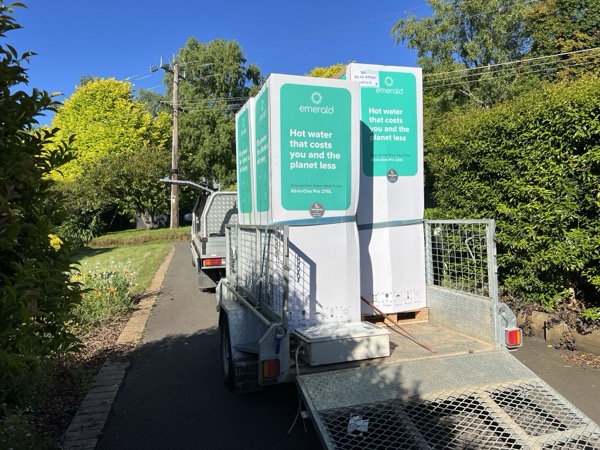
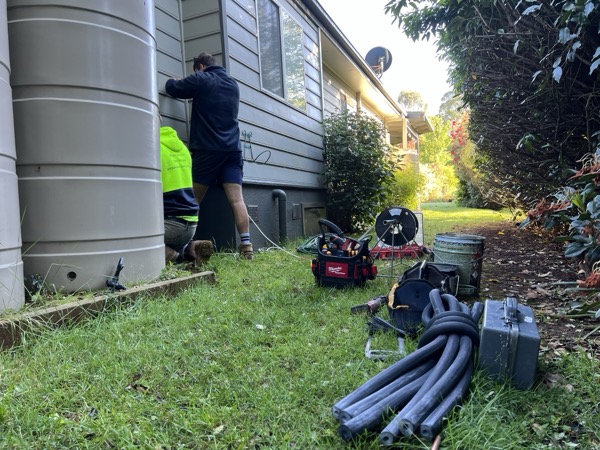
We finally got around to installing a hot water heat pump, to replace our gas hot water system. We were paying about $40 per month for our instant gas hot water (plus $40 connection fee). Now we’re paying nothing, because the heat pump is just using our excess solar power. Without solar, I estimate it would be costing us $8 per month to power it from the electricity grid. There are a few incentive schemes around to replace gas (or other old inefficient systems) with a heat pump. An installer will factor these into their quote. The subsidies can be significant. In our case, the total price was $4480, but it was reduced to $1650 for us to pay, after subsidies were subtracted. A hot water heat pump uses the same principle as an air conditioner (which is also a heat pump). It “pumps” heat from one side to the other. In this case, it pumps heat from the outside air into the tank of water. The basic physics is that when you compress air in a confined space, it gets hot, and when you expand…
-
 HQ
HQ
 HQ
HQ
 HQ
HQ
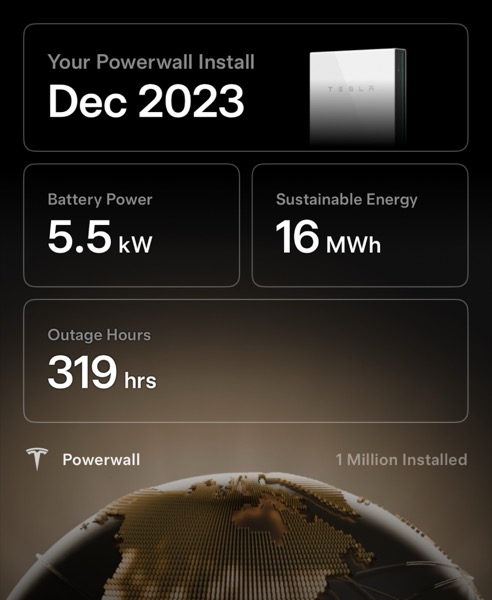
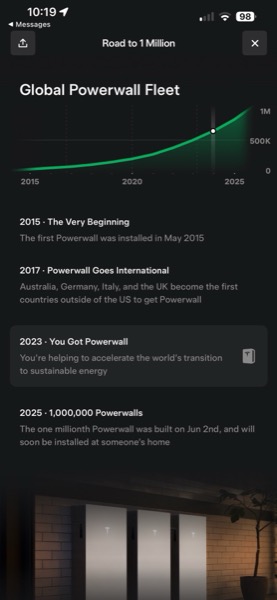
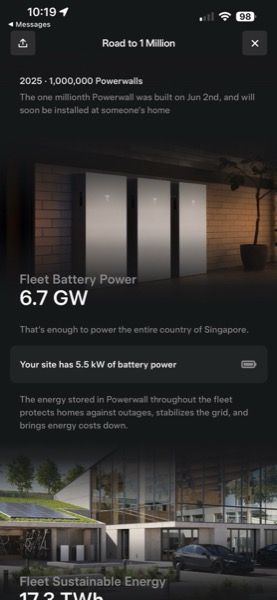
Our Powerwall — one of a million deployed
Our home Powerwall battery is one of a million deployed so far. The Tesla app celebrated by listing the stats of our install, and the fleet as a whole. Our battery has saved us (and our neighbours via extension cords) from 13 days of blackouts, without any noisy smelly generator, or trips to refill it with petrol. Our solar system has generated 16MWh of energy so far, used by our house appliances, home battery, our car and exports to the grid. At an average ball park price of say 15c per kWh, that’s $2400 worth of electricity, with no ongoing running cost.
-
 HQ
HQ
 HQ
HQ
 HQ
HQ
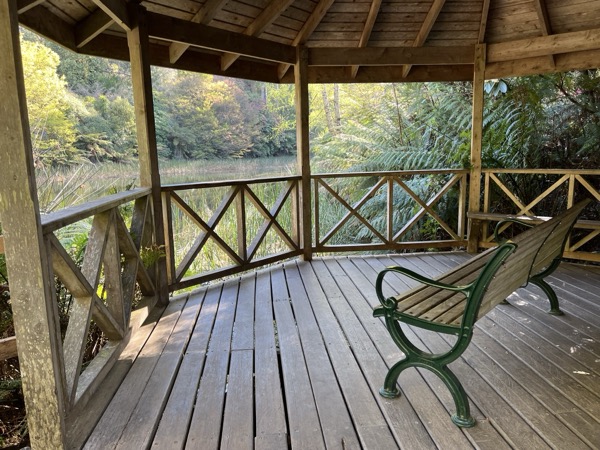
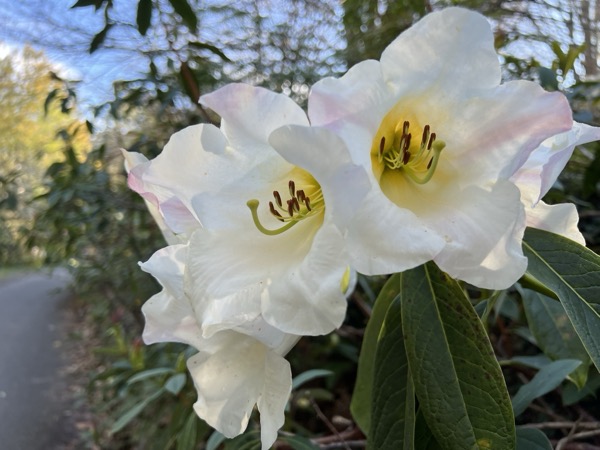
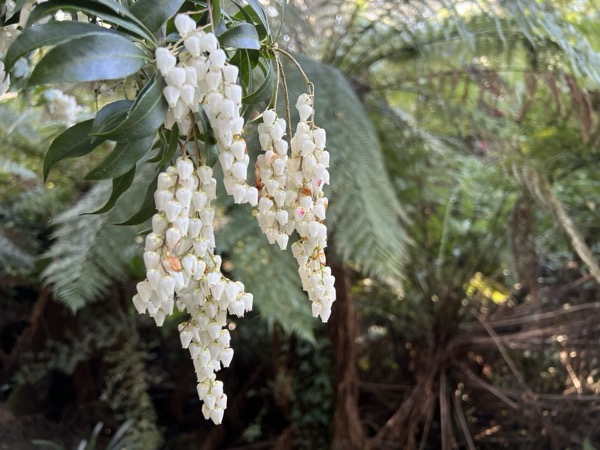
Finally, the Dandenong Ranges Botanic Garden
After two years in the Dandenong Ranges, we finally visited the Dandenong Ranges Botanic Garden. Amazing to see in Spring. It’s a huge place. I think we covered only 20% of it. Parking seems to be extremely limited and unmarked, in a dirt section across the road, which led to highly questionable parking.
-
 HQ
HQ
 HQ
HQ
 HQ
HQ
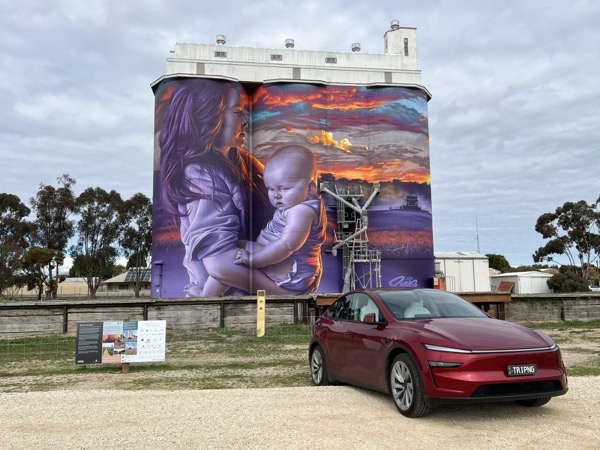
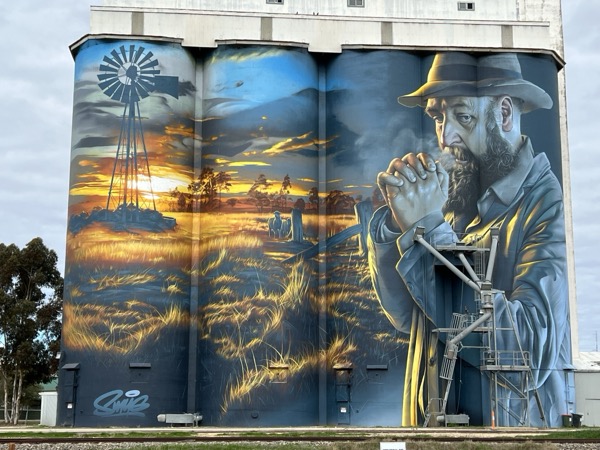
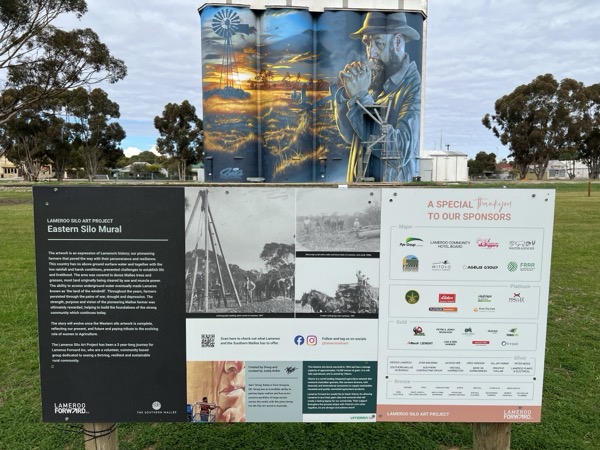
Silo art on the Mallee Highway home
August 10-11: We initially stumbled upon some silo art, then looked for more, on our way home from South Australia, starting along the Mallee Highway. Amazing.
-
 HQ
HQ
 HQ
HQ
 HQ
HQ
Last overnight stop, in Sea Lake
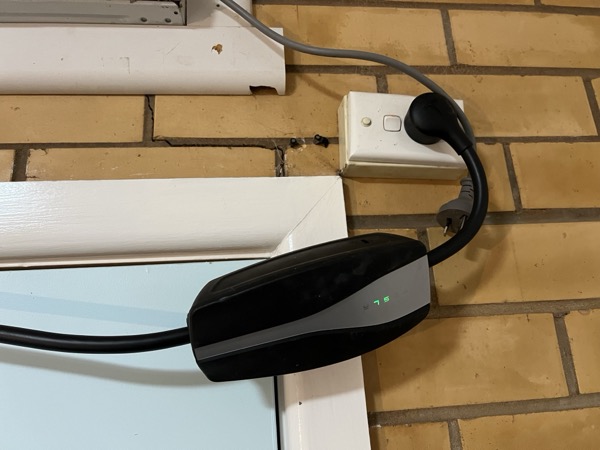
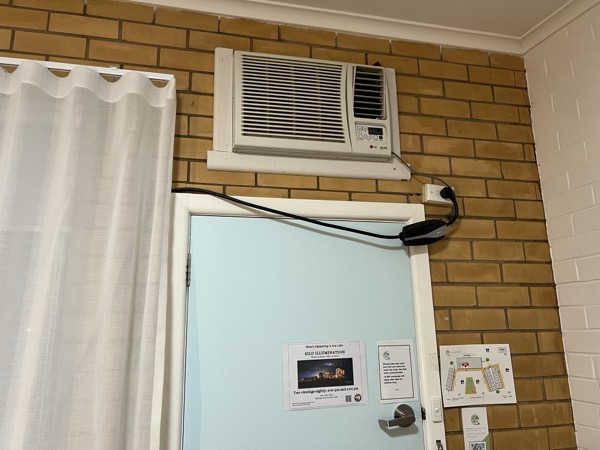
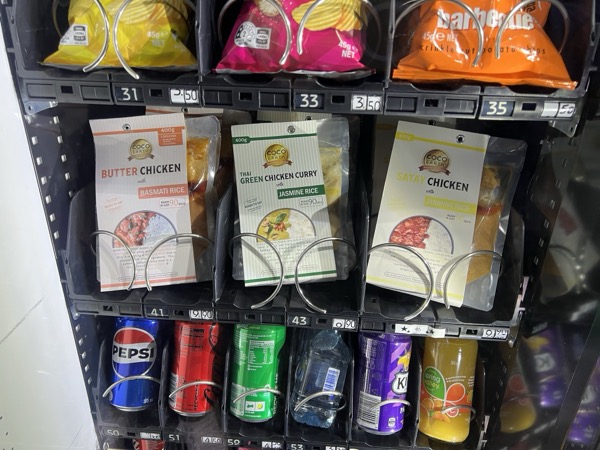
Part way through one of the Silo Art trails, yesterday, the sun was setting, so we booked a room at the next town, at the Sea Lake Motel. This is our final overnight stop before driving the remaining 450km to home, today. Last night, almost everything in this small town was closed. The motel stocks refrigerated meals in a vending machine, for people like us stopping in at the last minute. Great idea. We chose a curry, microwaved it in our room, but then realised that the used by date on the two packets was months ago, even though the used by date on the outer packet was fine. We decided not to risk it, and happily made a picnic tea out of our car travel food. We informed the host, just so they knew. It’s the fault of the food company, not the host.
-
 HQ
HQ
 HQ
HQ
 HQ
HQ
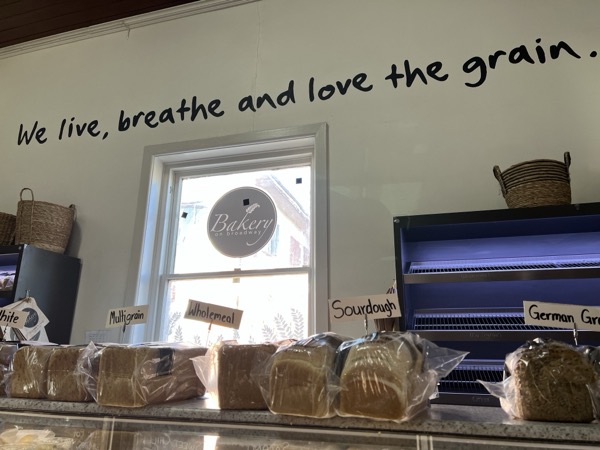
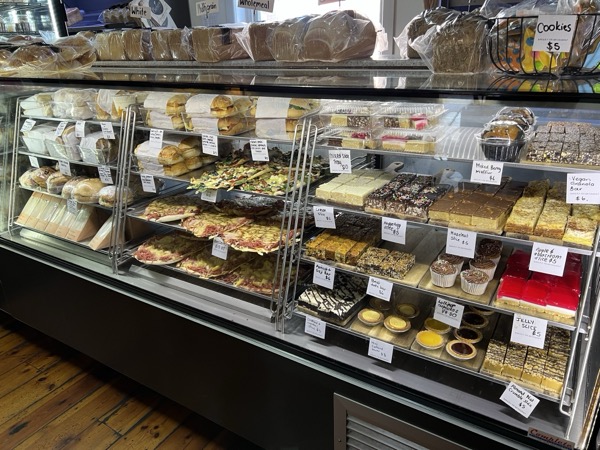
Bakery breakfast, and a coal-fed NRMA charger, in Wycheproof
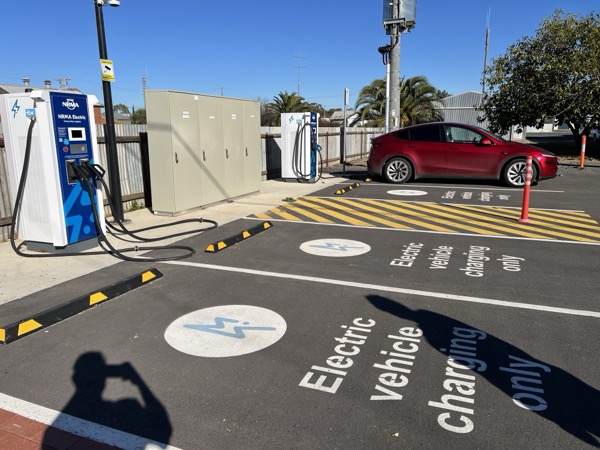
Breakfast and coffee stop at this enticing bakery in Wycheproof. Nice place. The NRMA charger up the road conveys “welcome”. The banners on the fence next to it imply “as long as your electricity comes from coal or gas”, perhaps. Let’s Google it: https://www.google.com/search?q=wind+turbines+generate+intense+electromagnetic+radiation+true+or+false
-
 HQ
HQ
 HQ
HQ
 HQ
HQ
The world's smallest mountain?
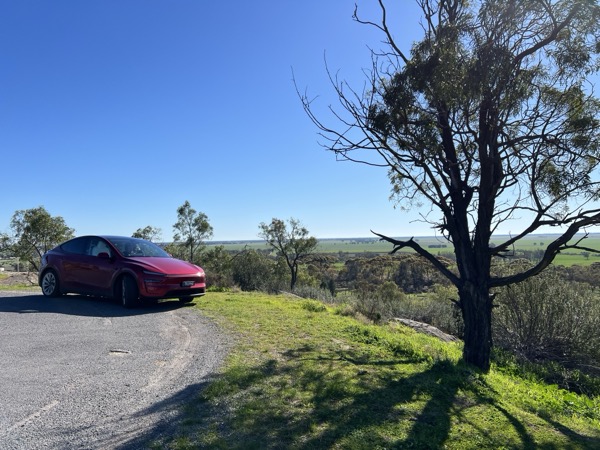
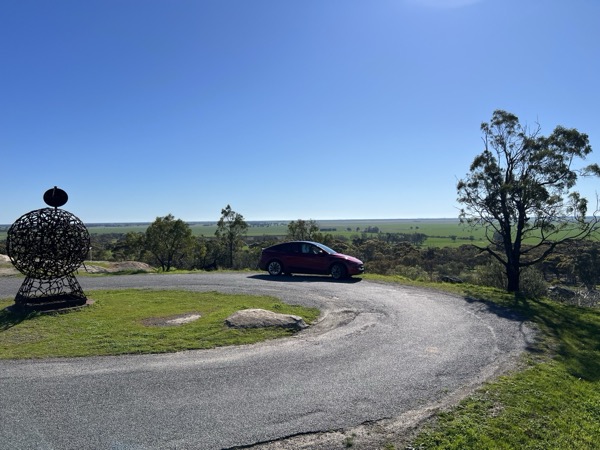
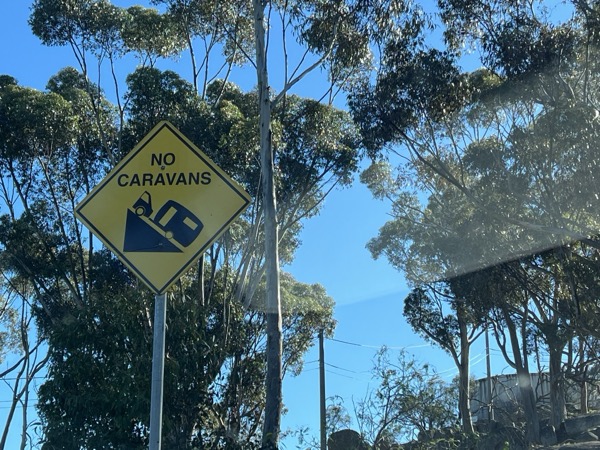
I think I saw a sign on the way in: “The world’s smallest mountain”. It’s 42m above the surrounding terrain, and only 147m above see level. But, it still gives a good view of the surrounding countryside.
-
 HQ
HQ
 HQ
HQ
 HQ
HQ
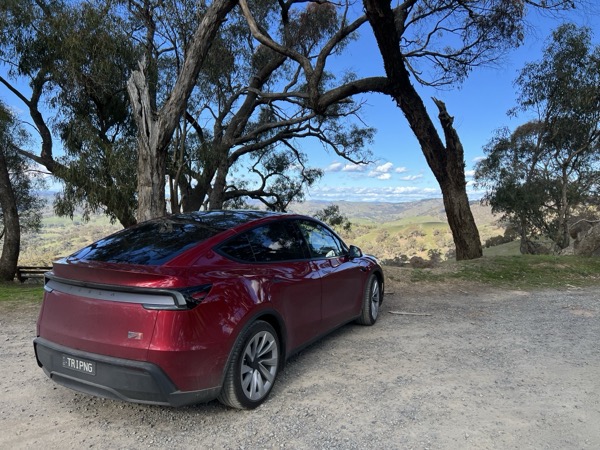
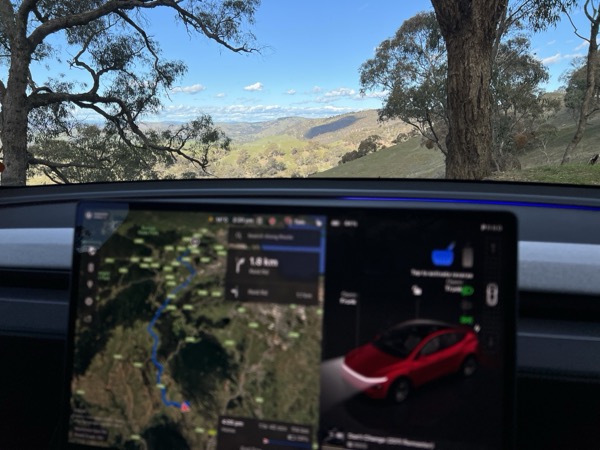
The last Anzac slice, near Bendigo
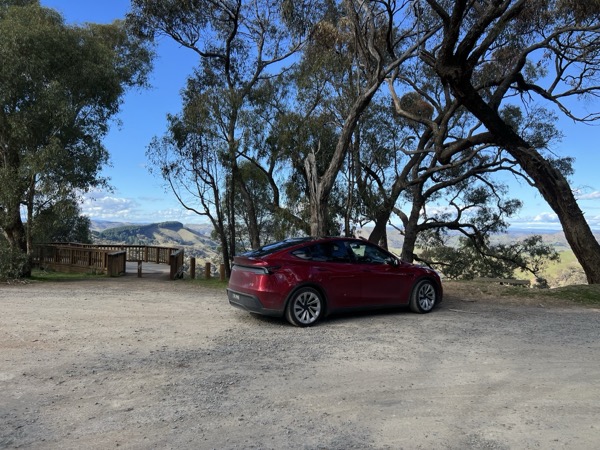
Our last piece of Anzac slice lasted until the last day of our road trip. Range anxiety – averted. Just passed Bendigo, this view over the “valley of a thousand hills” seemed appropriate.
-
 HQ
HQ
 HQ
HQ
 HQ
HQ
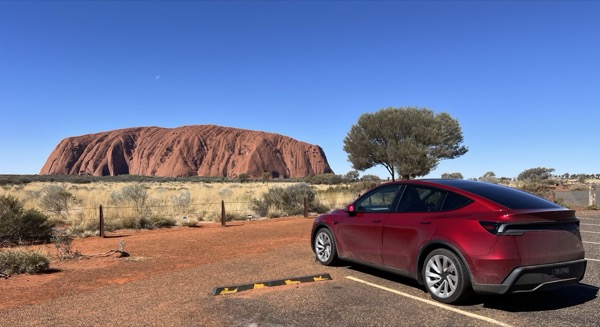
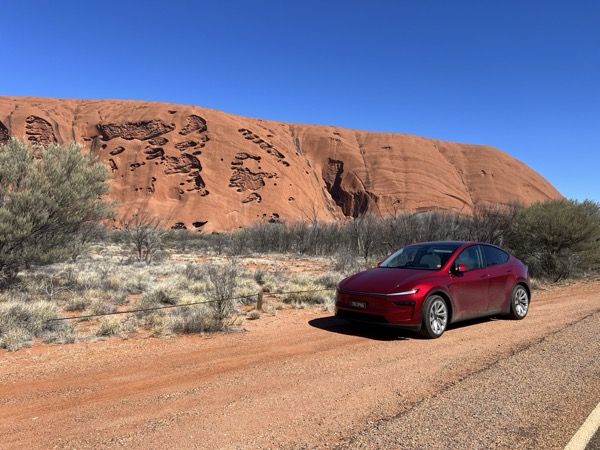
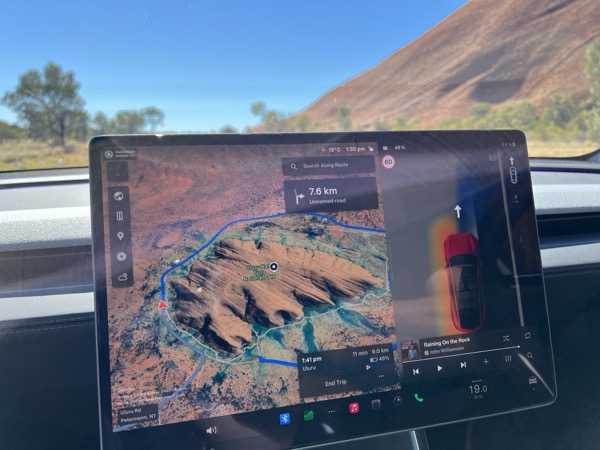
Tesla to Uluru: an 8000 km recap
July 23 - August 11: We drove to the centre of Australia in an EV. Using the shortest range EV that Tesla currently builds. If you like a long drive, the scenery is spectacular and sprawling. Wandering the sand dunes and spiniphex plains is very peaceful. Sunsets and Uluru are otherworldly. The charging infrastructure in Australia is getting better, but the drive up the Stuart Highway isn’t quite there yet. Thanks to RAA / Chargefox and The NRMA for your work so far on chargers along the Stuart Highway. We need improved reliability. We luckily dodged a few outages. Pimba lost power for a couple of days that made the EV charger unusable, but it fortunately worked during our time there. Glendambo (between Pimba and Coober Pedy) has only a 7kW charger that runs off the town’s diesel generator, and would not initially start, both times we passed through. The NRMA charger at Eldunda Roadhouse, in Ghan, died a couple of days after we visited. But, there’s almost always a plan B for an EV.…
-
 HQ
HQ
 HQ
HQ
 HQ
HQ
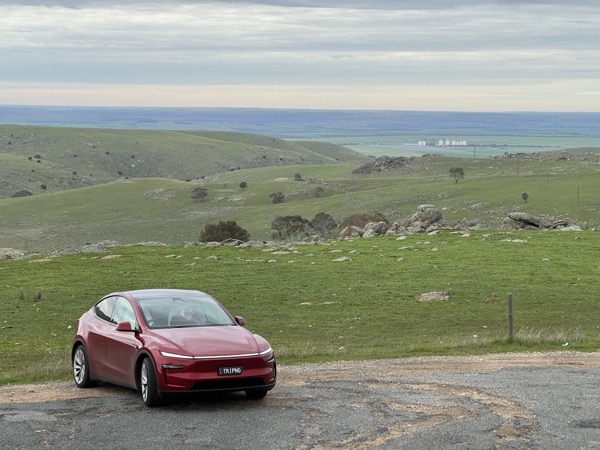
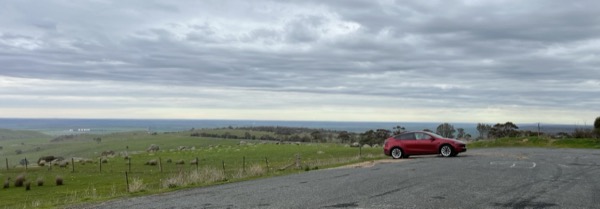
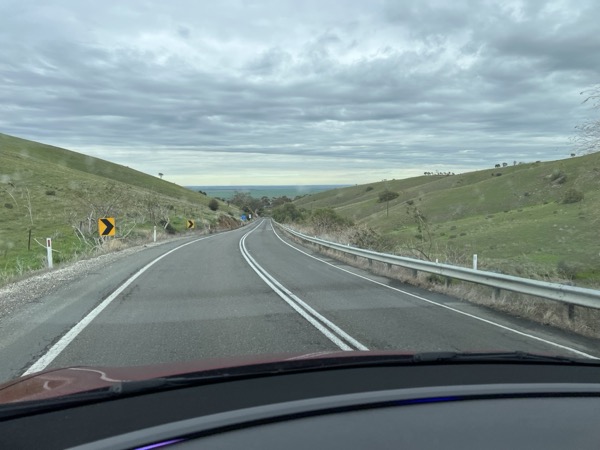
From the Barossa to a Singapore chat in Tailem Bend
We plotted a rough course from the Barossa Valley towards home. First stop at Palmer Lookout, then Tailem Bend, home of a raceway and drag strip, I believe, for “the best coffee in Tailem Bend” from Revival Cafe. At the Tesla super chargers, a couple from Singapore chatted to us about travelling. They hired their Tesla Model Y in Melbourne, drove through South Australia, and are next headed to Sydney in NSW. They have previously hired an EV from Perth and driven down to around Esperance. I told them I’d post their photo to encourage Australians to road trip in EVs in their own country.
-
 HQ
HQ
 HQ
HQ
 HQ
HQ
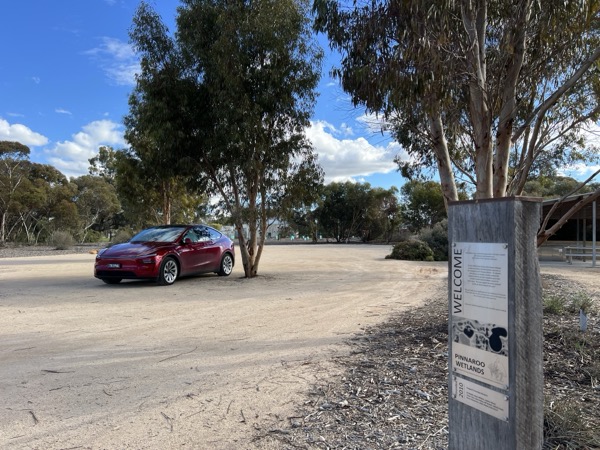
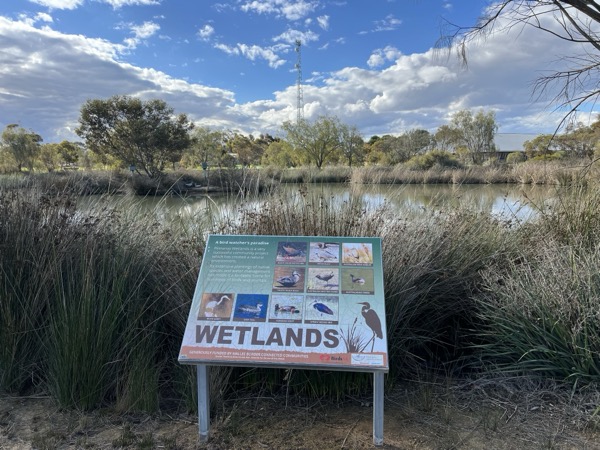
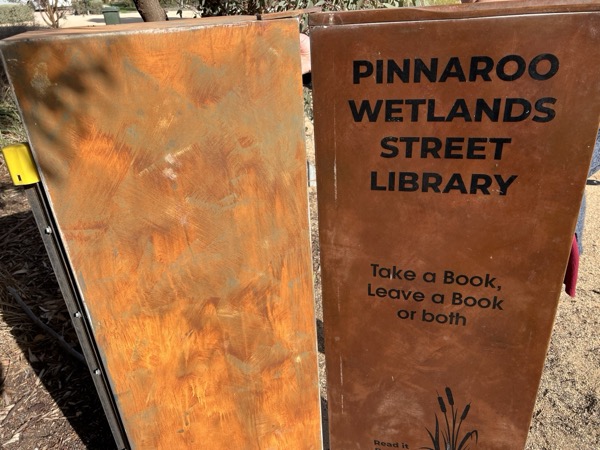
Lunch at Demi's Kitchen in Pinnaroo
We took the Mallee Highway to exit South Australia, stopping in Pinnaroo for lunch. Country town, after 2pm, on a Sunday, not much was open. Typing “lunch” into the iPhone’s Maps app, and filtering for “Open Now”, showed Demi’s Kitchen, a few blocks from the center of town. Time for a wander, through the town green. Cute food truck style caravan in her front garden. We took our “super veggie fried rice” and “curry vegetable dumplings” down the road to the Pinnaroo Wetlands park, around the corner from the tractor dealership. All in all, a pretty nice town. Glad we had the chance to explore.
-
 HQ
HQ
 HQ
HQ
 HQ
HQ
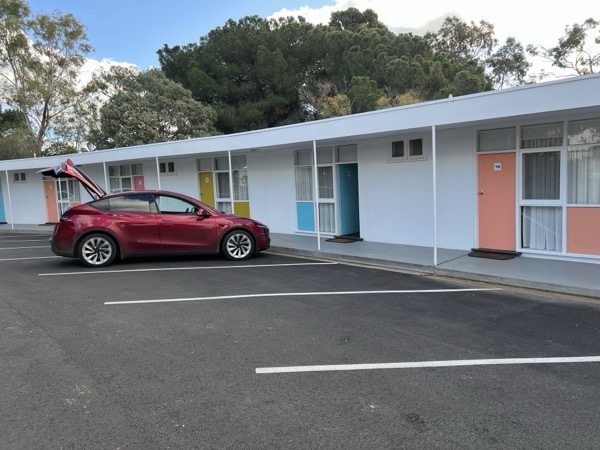
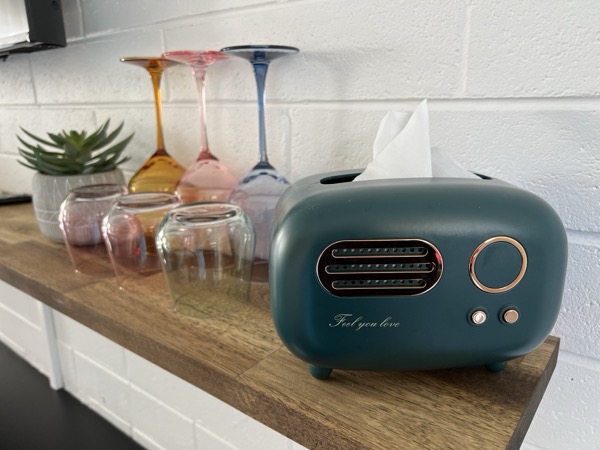
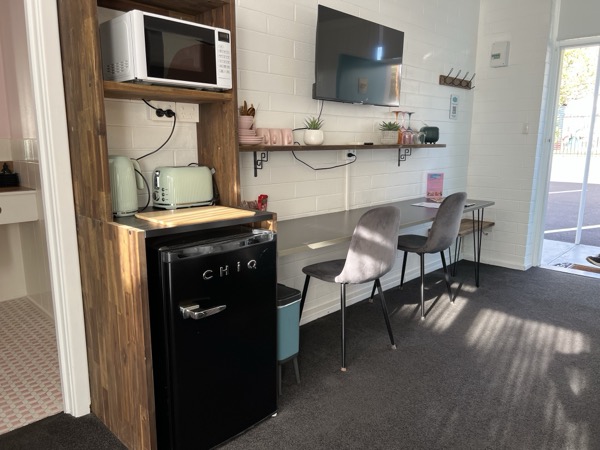
A sixties throwback at the Lyndoch Motel
Our home for a couple of nights at The Lyndoch Motel, in the Barossa Valley. Super cute sixties retro theme. The plumbing might need an update, however. We hear the neighbour’s drain through our own. White sneakers from the frunk still have a shade of red earth from the outback.
-
 HQ
HQ
 HQ
HQ
 HQ
HQ
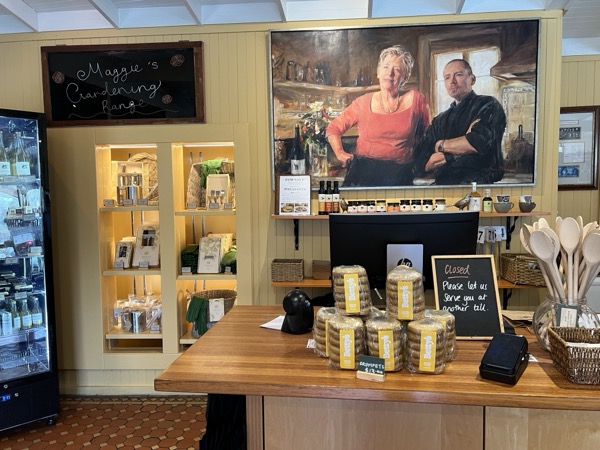
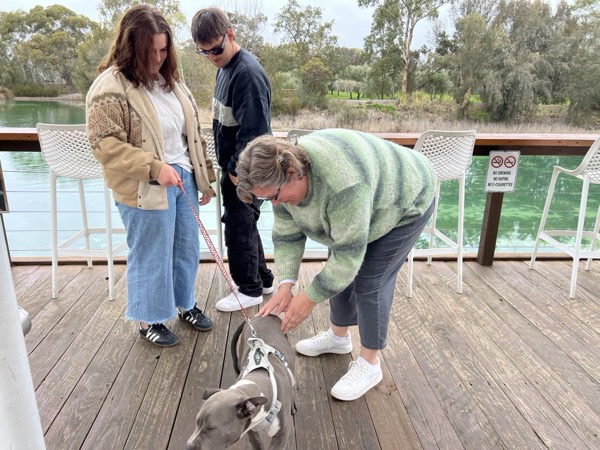
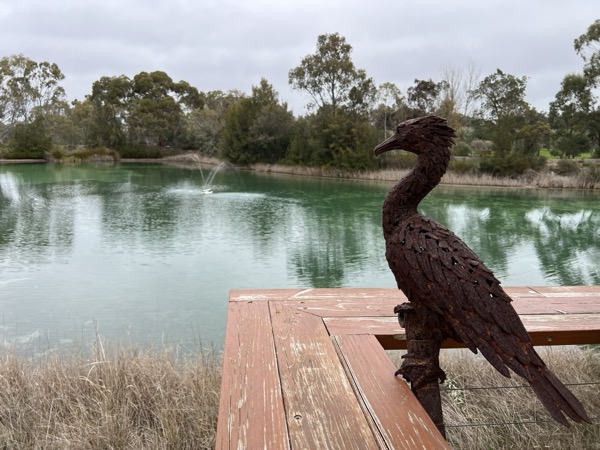
Lunch at Maggie Beer's Farm Shop
Lunch and a stroll at Maggie Beer’s Farm shop in The Barossa Valley.
-
 HQ
HQ
 HQ
HQ
 HQ
HQ
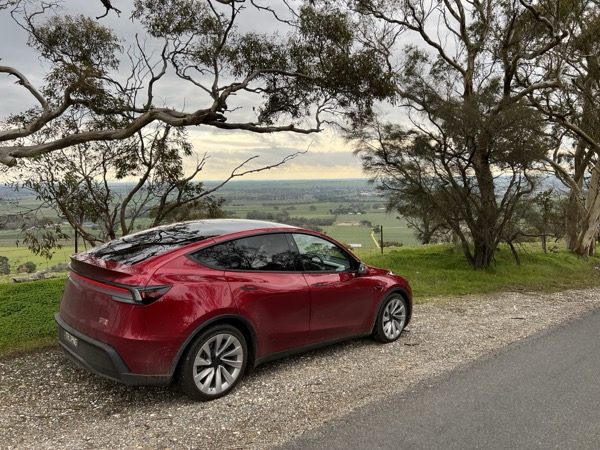
Numb Skulls at the Barossa Sculpture Park
We were exploring the Barossa Sculpture Park, when randomly the Variety Bash cars turned up, including the “Numb Skulls” with the skulls on the boot, whom we met a week ago in Glendambo, on our way to Uluru. Big country, small world.
-
 HQ
HQ
 HQ
HQ
 HQ
HQ
Topped up in Glendambo — return trip
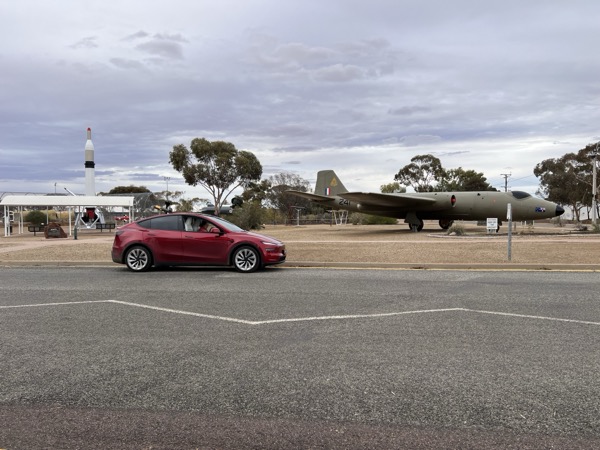
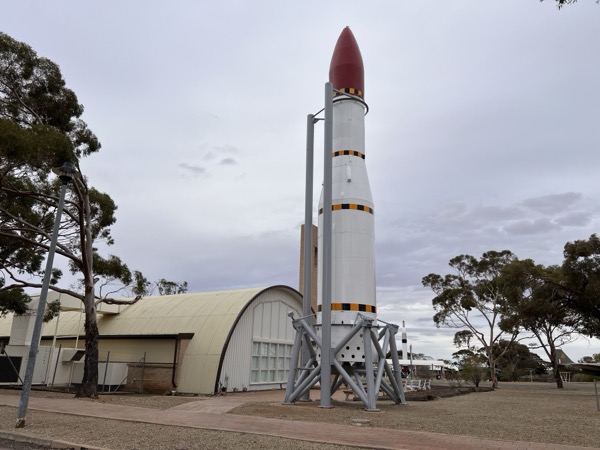
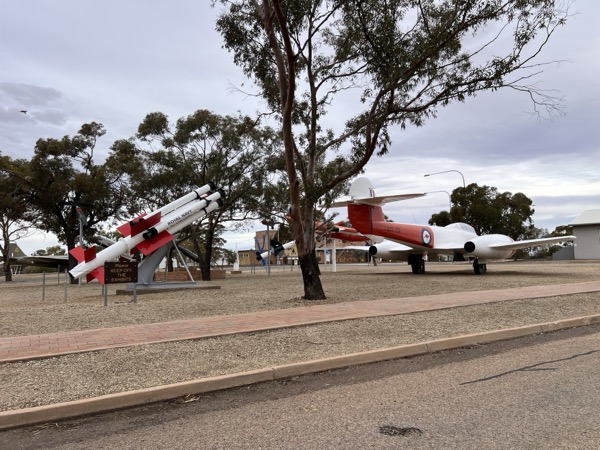
Having topped up in Glendambo (see our previous post), we finally made it to Pimba. “Let’s check out Woomera first” – so we turned left and kept driving. The “Pimba” showcase sign featured a train crossing. Living up to the promise, we were immediately stopped at the rail crossing by a long freight train headed south along the Ghan line. At about this point we thought we maybe should have charged up before going exploring, but 10% seemed fine. We followed the GT to overtake the road train, and then turned off into Woomera. We did a lap of the town, with a stop by the rockets and relics of years gone by. This used to be an active RAAF base, with a mixed history of rocket testing and sadly affected lives from radiation exposure. We only saw about three people in the town. We headed back to Spud's Roadhouse in Pimba, plugged into the RAA/Chargefox fast charger, used the facilities, bought a chocolate bar, drank some tea, then decided to keep driving, to stay in Port Augusta tonight.
-
 HQ
HQ
 HQ
HQ
 HQ
HQ
Green lawns and EV chargers at Port Augusta
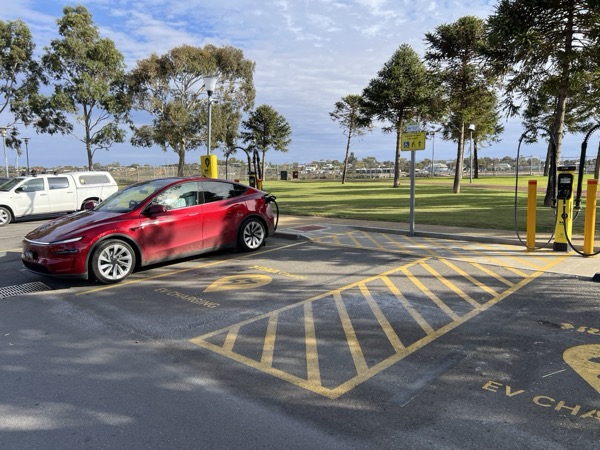
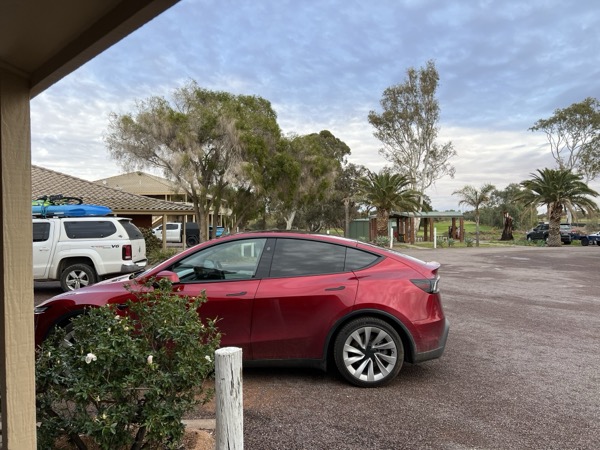
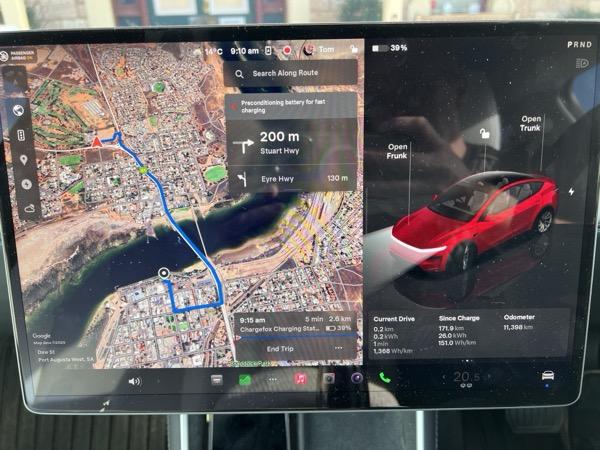
Leaving the outback behind, we stayed last night at the Standpipe Golf Motor Inn, in Port Augusta. This is the first green lawn we’ve seen in many days. Part of the reason we picked this place is because their online profile says it has EV chargers on site. In our booking comment, we mentioned that we’d want to use the EV charging, since that often helps a host allocate a nearby room. Shortly after, they rang us to say that the chargers were out of action. According to PlugShare, they’ve been offline for a long time. Please get them fixed or remove the listing from your booking profile. In the morning, we crossed the river to the esplanade to grab some breakfast supplies. While parked, we plugged into the RAA/Chargefox EV charger. Very convenient, next to the shops and foreshore, Moreso than the Tesla chargers up the road, which we used last time. We also gave a brief interview to Nick from Yahoo News Australia, about our recent EV charging experience in the outback. I hope the…
-
 HQ
HQ
 HQ
HQ
 HQ
HQ
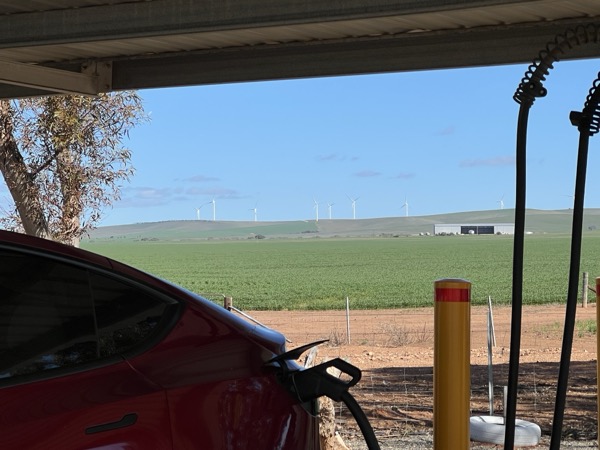
Hatch-breakfast on the way to the Barossa
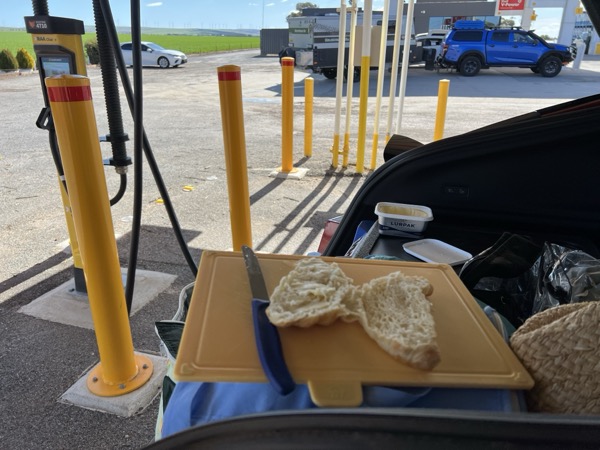
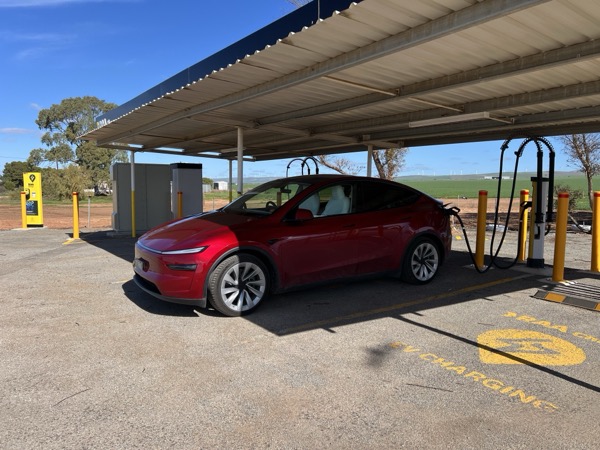
Port Augusta to Barossa Valley, stopping for a late breakfast from the hatch of the car. The fridge is conveniently located with butter for our croissants and milk for our cereal. The mountains to the west looked interesting, so we diverted off the main road through endless green fields. Such a contrast to the endless red earth from a few days ago.
-
 HQ
HQ
 HQ
HQ
 HQ
HQ
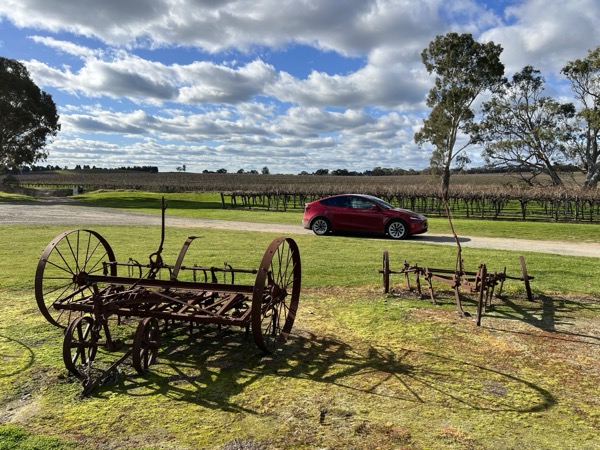
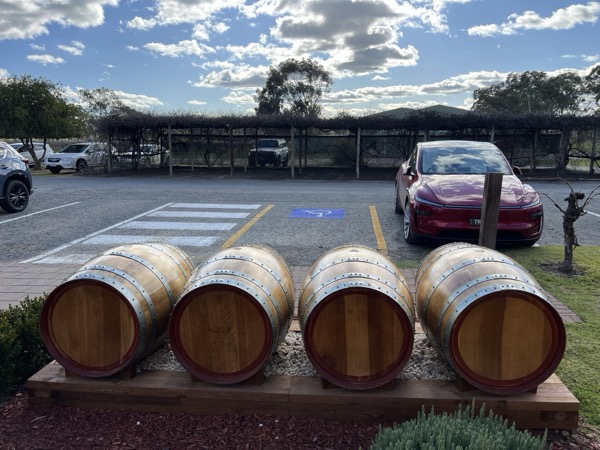
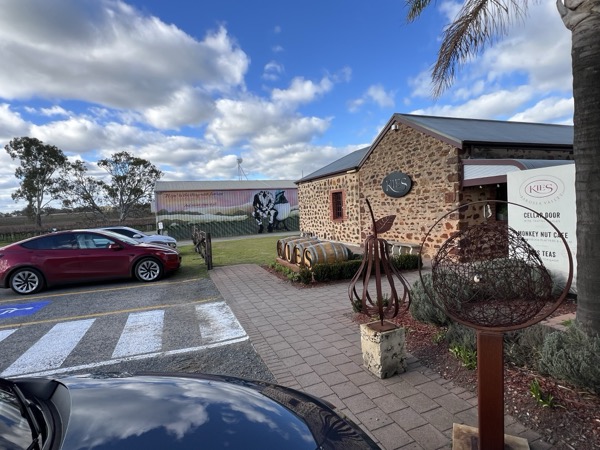
A late lunch at Monkey Nut Cafe
Late lunch at the Monkey Nut Cafe (Kies Winery) in the Barossa Valley. Kitchen had closed so we had to make do 😉 with a grazing board, coffee and scones, all to share. Very friendly staff. Beautiful place. The age old battle of cream first vs jam first, continues.
-
 HQ
HQ
 HQ
HQ
 HQ
HQ
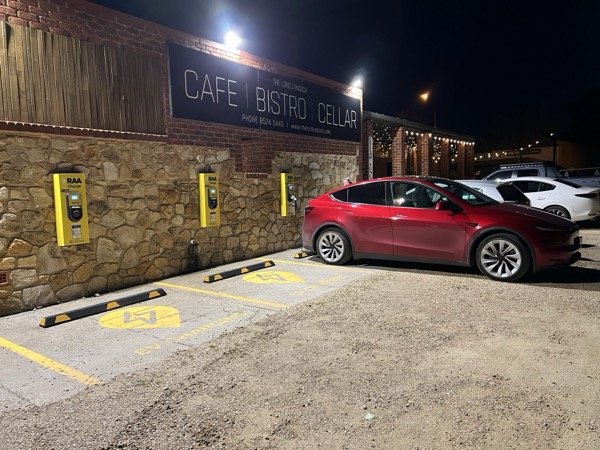
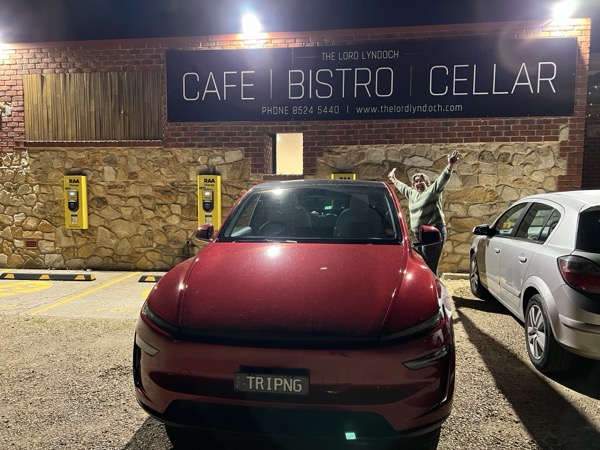
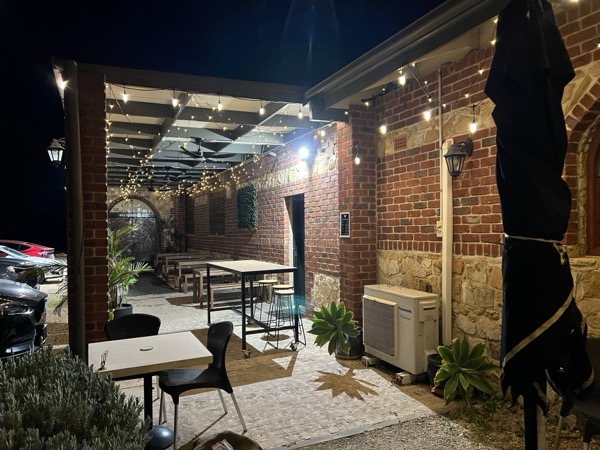
Dinner at The Lord Lyndoch, in The Barossa Valley
Dinner at The Lord Lyndoch, in The Barossa Valley. Charging: Oh, look, they have EV chargers in the car park. Let’s plug in while we’re having dinner. What a great idea. Thank you RAA/Chargefox.
-
 HQ
HQ
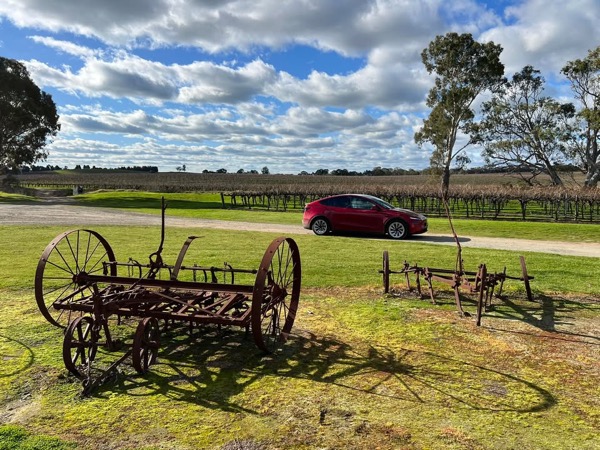
Vineyards from the Monkey Nut Cafe
At Monkey Nut Cafe, in the Barossa Valley, with endless vineyards in the background.
-
 HQ
HQ
 HQ
HQ
 HQ
HQ
A wary dusk drive into Port Augusta
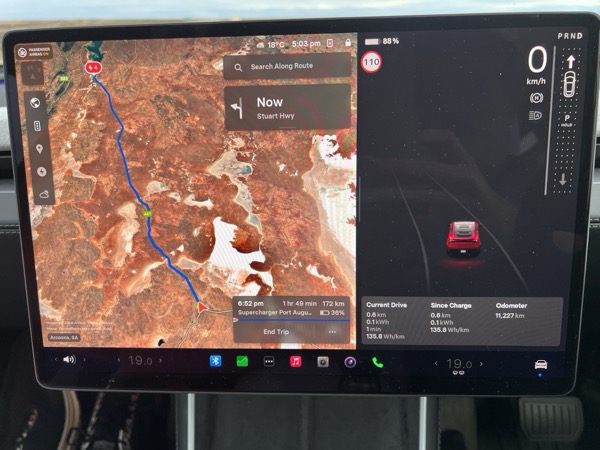
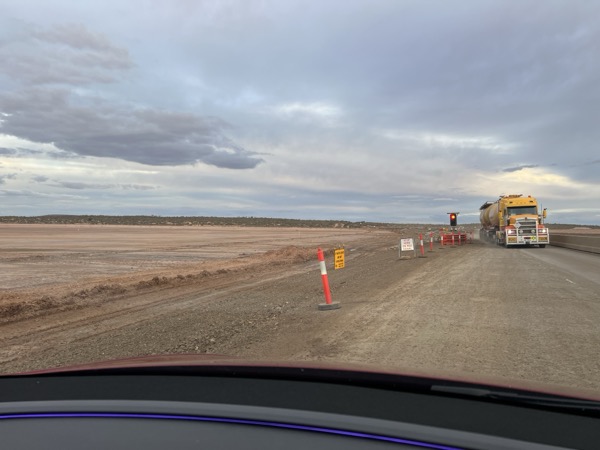
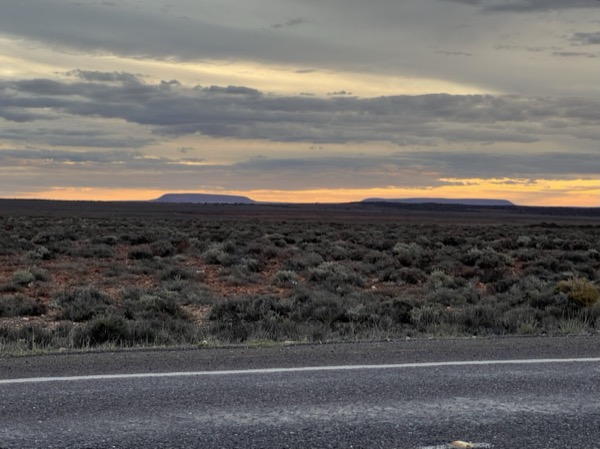
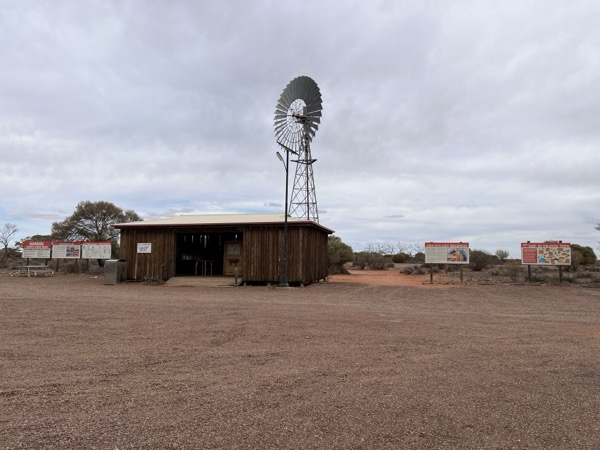
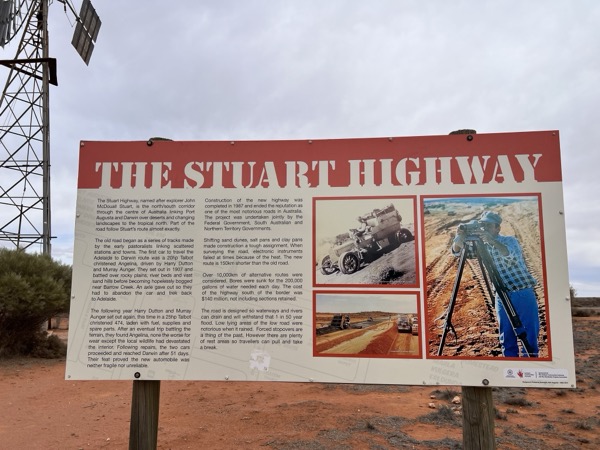
In today’s drive, from Coober Pedy, this was the final leg from Spud's Roadhouse, Pimba, south to Port Augusta. We normally avoid driving at dusk, due to animal activity on the roads. We spotted many sheep along the road from unfenced properties, and a couple of cows. Just as we were leaving Pimba, a kangaroo jumped out on the other side and stared at us. It was the only alive kangaroo we’ve seen out here this trip, probably because we don’t usually drive in the twilight hours. The sunset put on its usual glorious display, tempting me to stop to take photos, but we drove on. A police car pulled over a speeder heading north. Might have saved their life, or at least a wrecked car. We drove on slowly, far behind a road train. I wasn’t game to overtake into possible oncoming wildlife. We had the Tesla on Autopilot, so it drove while we watched for movement on the sides. The maximum follow distance setting is 7 (as in the photo), but that’s too close at speed, or behind a truck that can…
-
 HQ
HQ
 HQ
HQ
 HQ
HQ
Stuck in Glendambo with the local hero (Chris)
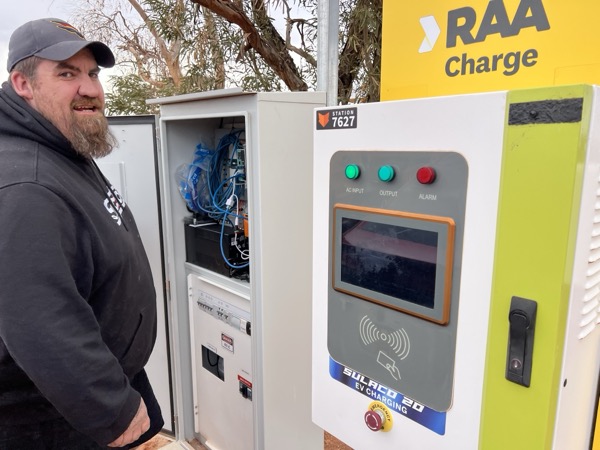
As you can probably tell by the first photo of the local hero (Chris) resetting the EV charger, we stayed a lot longer in Glendambo than we had planned. Similar problem, now on our way south from Coober Pedy, as we had a week ago during our trip north.
-
 HQ
HQ
 HQ
HQ
 HQ
HQ
Breakfast under Kata Tjuṯa
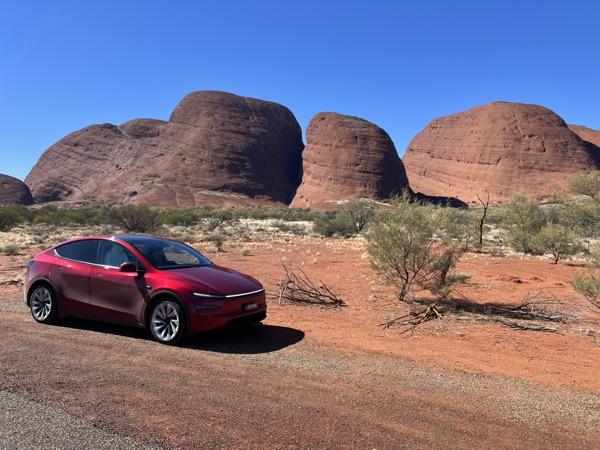
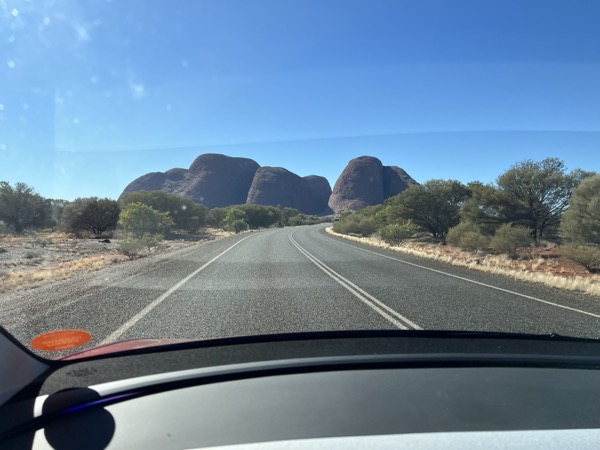
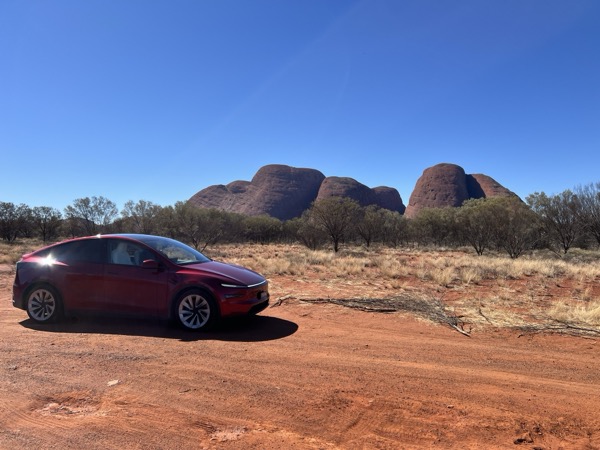
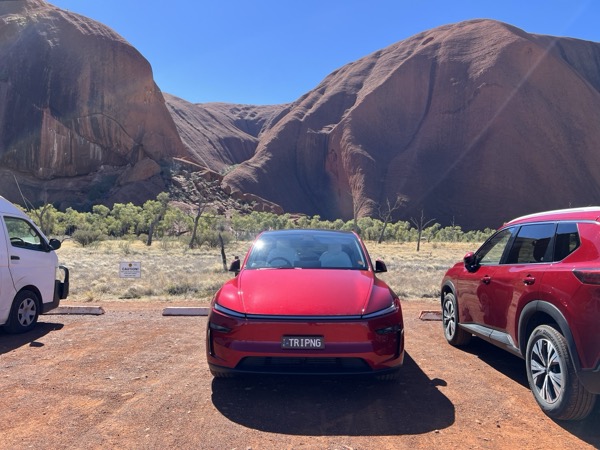
Kata Tjuṯa is even more huge than Uluṟu. You can tell from the relative size of each in the distance from each other. But, of course, Uluṟu is one whole rock. We set up breakfast out of our camp fridge and bags, at Kata Tjuṯa. We didn’t see any of the dingos, warned by the signs. Then a few short walks. One of the other visitors had just driven from WA, and asked where the next petrol station was. I laughed and told him that of all the people he could have asked, I was probably the least suitable, driving an electric car. But I happened to know that there is one back at Yulara, about 40km away. He seemed relieved that was less than the fuel range he had remaining. We discussed the high cost of fuel out here, at around $3 per litre. He asked about our electric car. I mentioned that I’d noticed that the toilet block in the car park had a power point, next to the hand dryer. In an emergency, I could probably use that, powered by the solar on the roof and I think backup diesel generator.…
-
 HQ
HQ
 HQ
HQ
 HQ
HQ
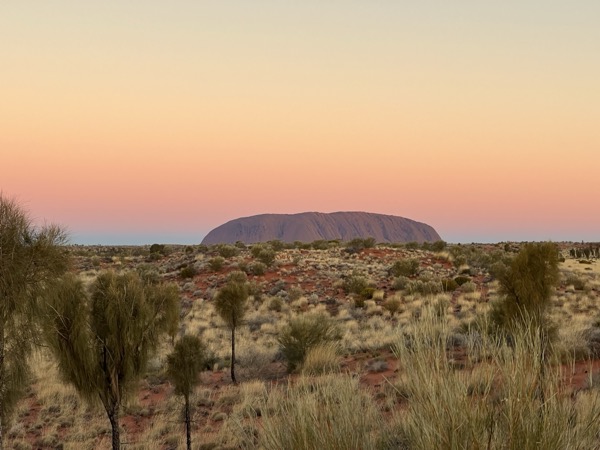
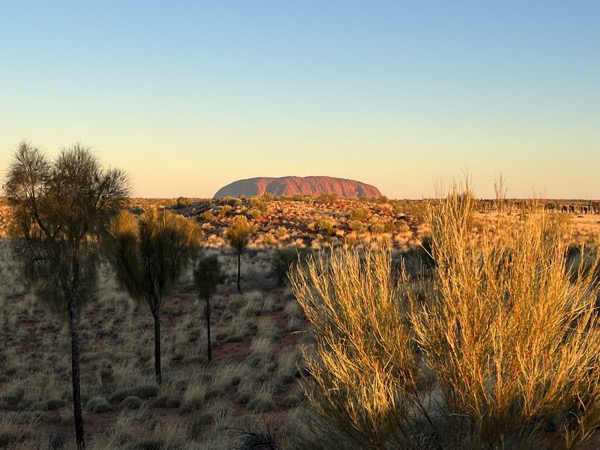
Walking the shaded trails of Uluṟu
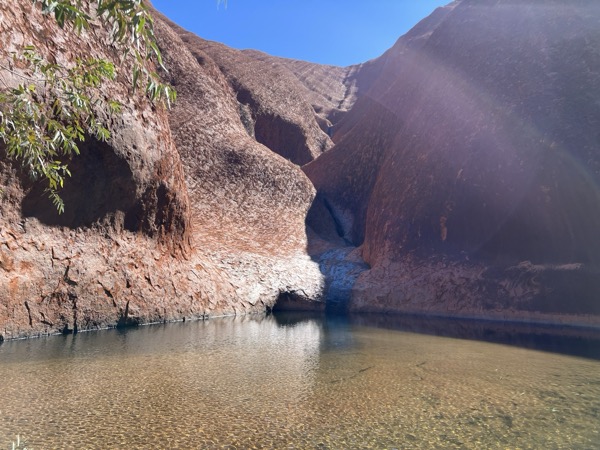
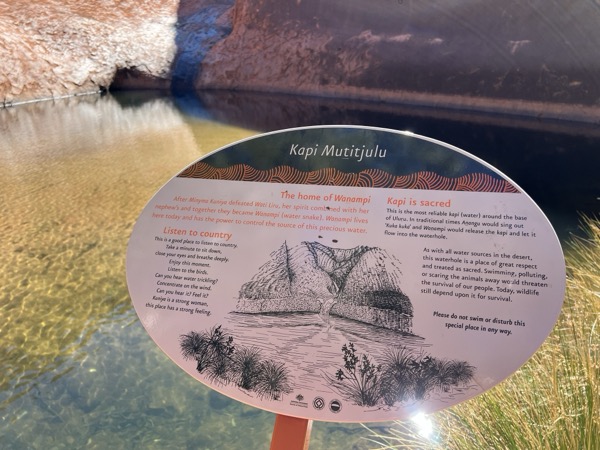
August 2,3: Even though it’s fairly cool now, in winter, the sun can still pack a punch. This waterhole is understandably sacred to the traditional owners, being a water oasis in the desert. The walking trails are closed if the temperature hits 36°C. Most walking trails seem to have heat warnings, shaded seats and water supply near the entrances. While we were out walking, I set the Tesla to enable cabin overheat protection, and lowered the threshold to 30°, because I had some perishables in the car.
-
 HQ
HQ
 HQ
HQ
 HQ
HQ
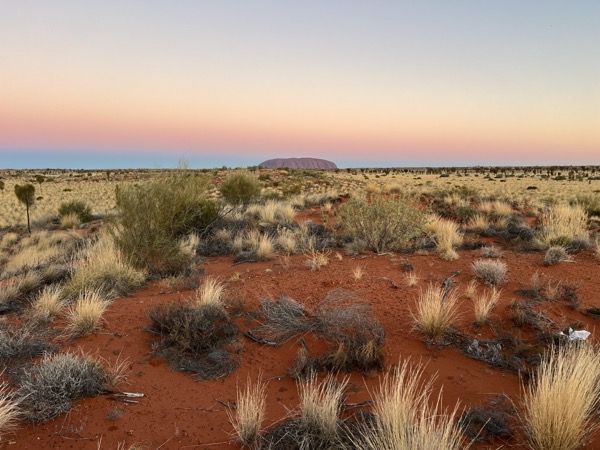
Sounds of Silence: dinner under Uluru's stars
Last night – magical sunset over Uluru and distant Kata Tjuṯa, while enjoying canapés, buffet dinner, drinks in the middle of the outback. To top off our Sounds of Silence experience, a star talk – a mix of astronomy and traditional interpretation. Fascinating and informative. Loved the sky pointer.
-
 HQ
HQ
 HQ
HQ
 HQ
HQ
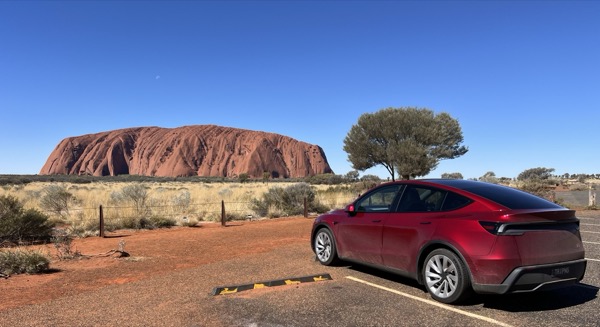
Driving around, and around, Uluru
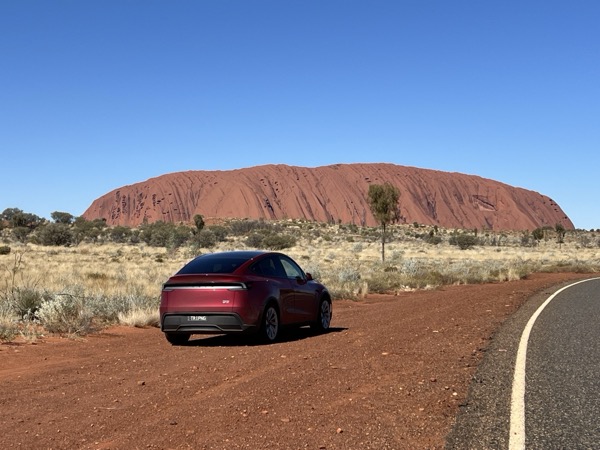
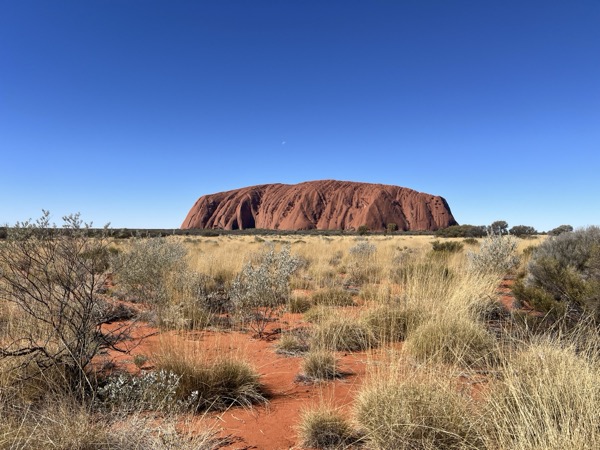
August 2-3: It’s enormous. Photos don’t really capture the size. Amazing experience. The colours, the scope, the remoteness, the contrasts, the culture.
-
 HQ
HQ
 HQ
HQ
 HQ
HQ
Arriving early at Ayers Rock Campground
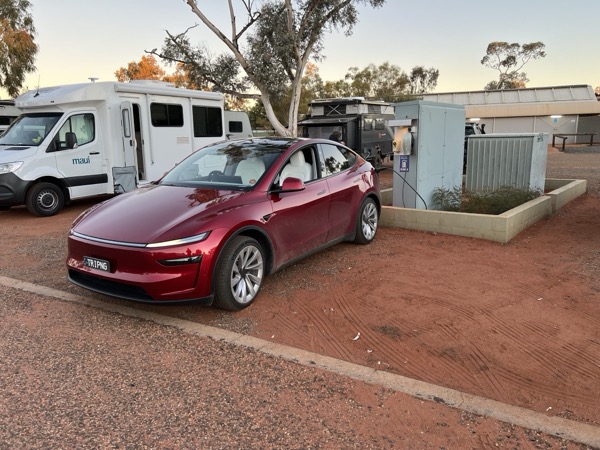
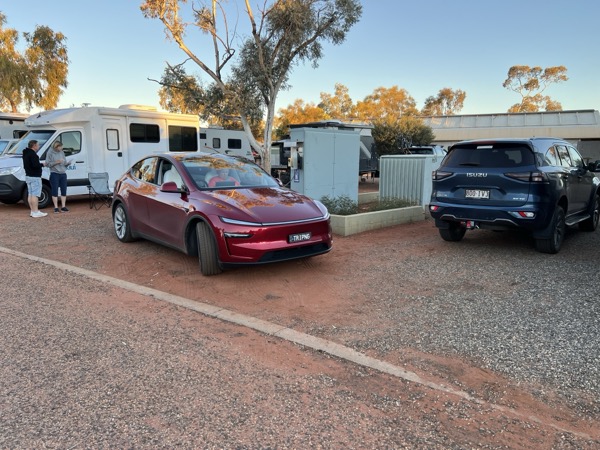
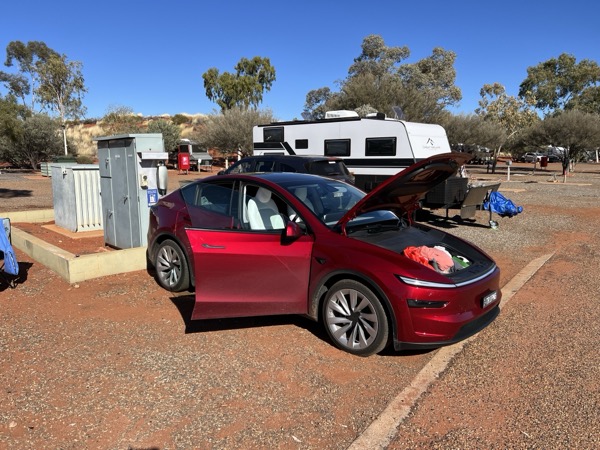
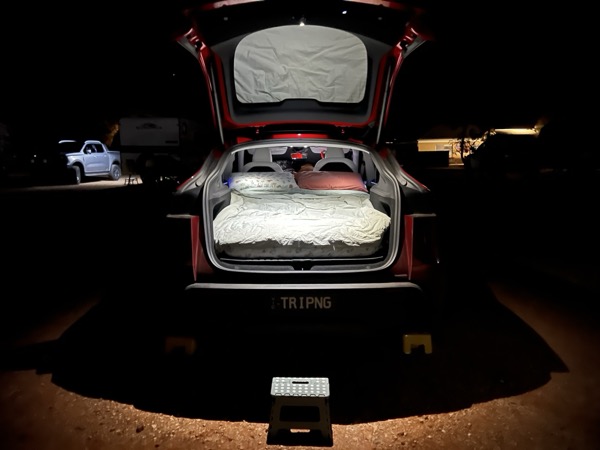
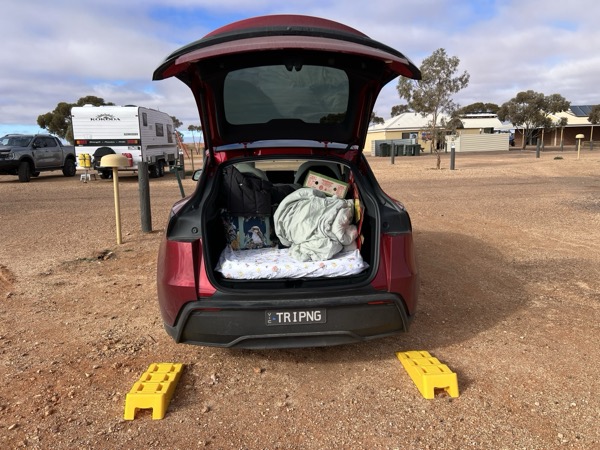
We arrived a day ahead of schedule at Ayers Rock Campground. We had booked a powered site, starting from tomorrow, but none were available tonight. The staff offered us the unpowered overflow campground area. Our original plan was to charge the car at our powered site, while also running the air conditioning and accessories. Without a powered site tonight, we had to charge up the car a bit first, so we could just run it off the giant battery. We used the auto inflate button on our Snuuzu mattress, added pillows and doona. We moved the baggage to the front seats, so the bed wasn’t obstructed. While car camping in Coober Pedy a few days ago, we discovered that even with our portable wheel ramps the car’s bed floor still leans backwards too much. So, we backed the car up a small hill as well. We used our fold up spade to fill in a couple of holes from previous campers. We set the Tesla to “camp mode”, so we could sleep in the back of the car at 20°, while it was 3° outside, overnight.…
-
 HQ
HQ
 HQ
HQ
 HQ
HQ
Charging at the centre of the centre of Australia
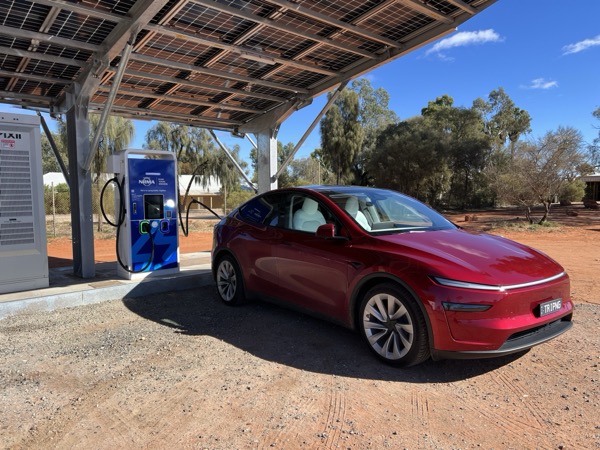
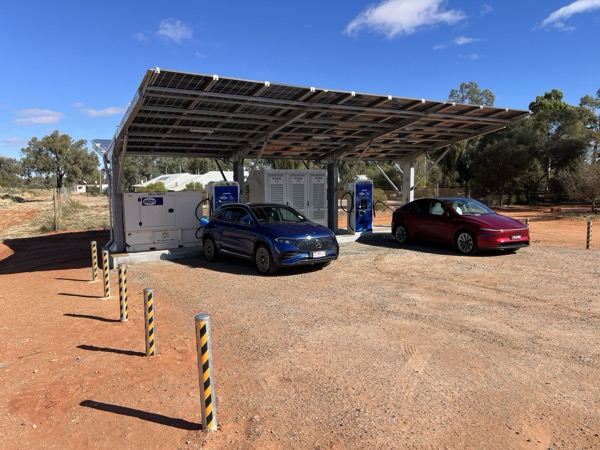
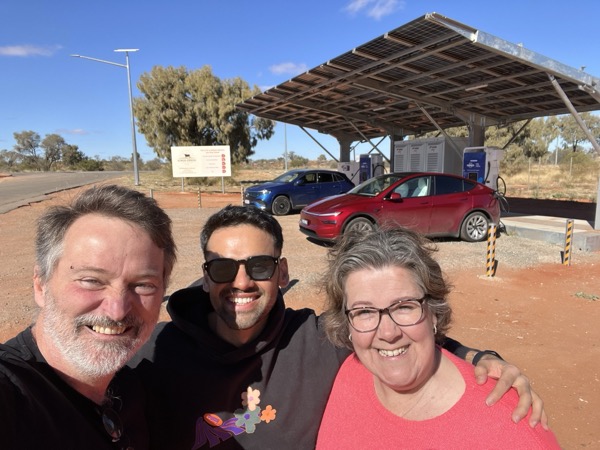
Charging our EV in "the centre of the centre of Australia". After driving 1500km north along the Stuart Highway, we reached “the centre of the centre of Australia”., with a turn left/west towards Yulara and Uluru. First we stopped at the intersection’s Erldunda Roadhouse, in the town of Ghan (well, that’s all there is in Ghan). We grabbed some lunch, laughed at the banners for sale, and visited the emus. No cell reception for our Belong phone SIMs (which it seems doesn’t quite give us the whole Telstra network), so we made use of the free wifi. Petrol here is about a dollar per litre more expensive (about 50%) 😮. The fast charger is also about 50% more expensive than typical. At the EV charging station, we chatted to Jigar. He bought his EV in Darwin, then later started working at Uluru and I think Alice Springs. This charger is perfectly positioned for EVs passing through.
-
 HQ
HQ
Almost there… to Uluru
Almost… there… to Uluru.
-
 HQ
HQ
 HQ
HQ
 HQ
HQ
From Perth, on petrol and electrons
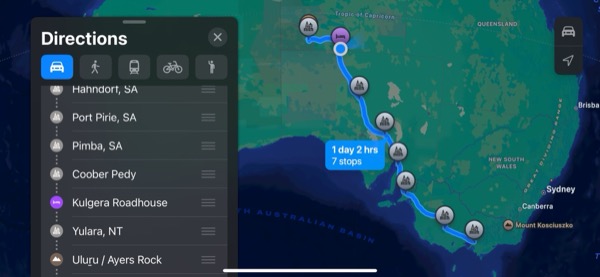
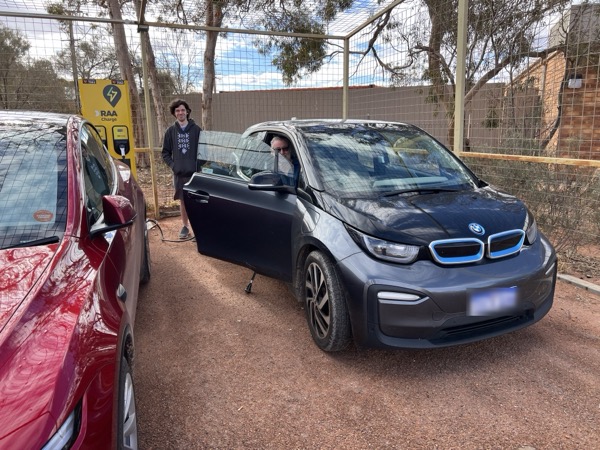
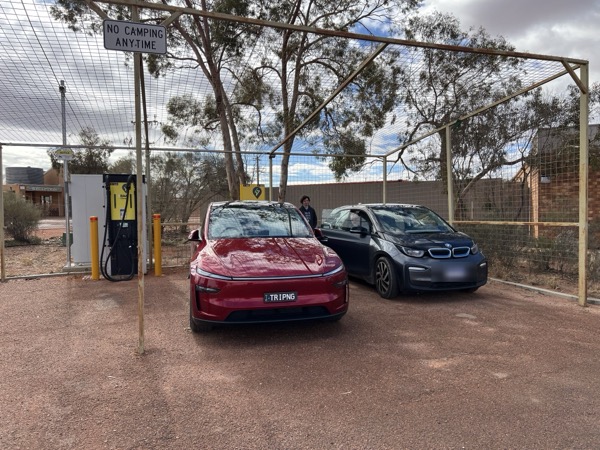
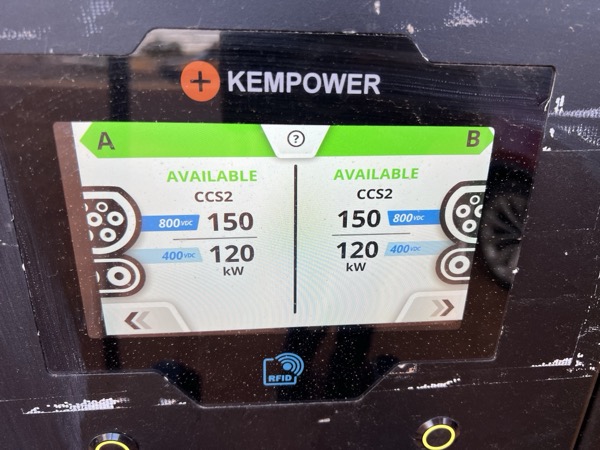
They had driven all the way from Perth. Two blokes in a BMW i3 on Western Australian plates, pulled in beside us at the fast charger in Coober Pedy. Apple Maps reckons the quickest run from Perth is 28 hours of driving, and that is 28 hours of actual steering, before you add sleeping, eating, fuel or charging. Theirs is the plug-in hybrid version, so it fills up two ways: from electricity, and from petrol. A plug-in hybrid gets marketed as the best of both worlds, and it sounds logical enough. Two ways to fill up, so you are never caught out. On a trip like this one it works out differently, because you do not get to pick. You end up filling from both, most of the time. Half of both worlds might be closer. You get well under half the electric range of a fully electric car, and a nine litre tank where a petrol car carries fifty or sixty. So on a long run you take whatever is in front of you, whenever it is in front of you. They told me they would often stop for petrol, and then stop…
-
 HQ
HQ
 HQ
HQ
 HQ
HQ
Destination charger in Coober Pedy
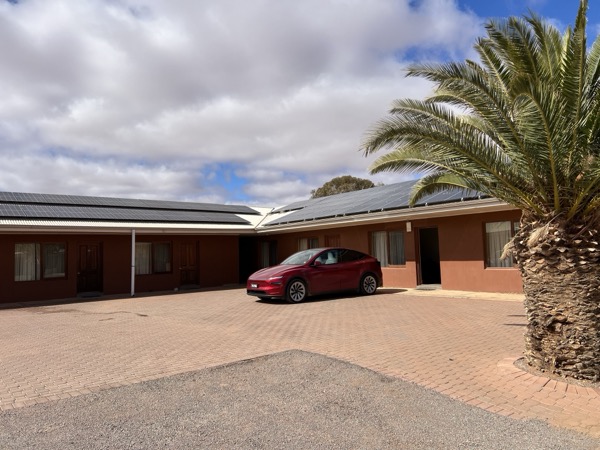
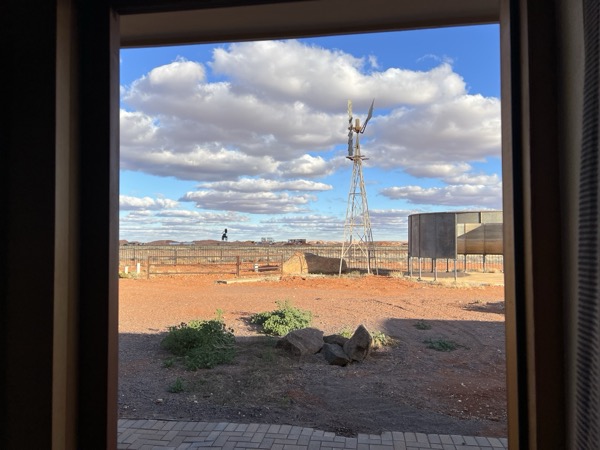
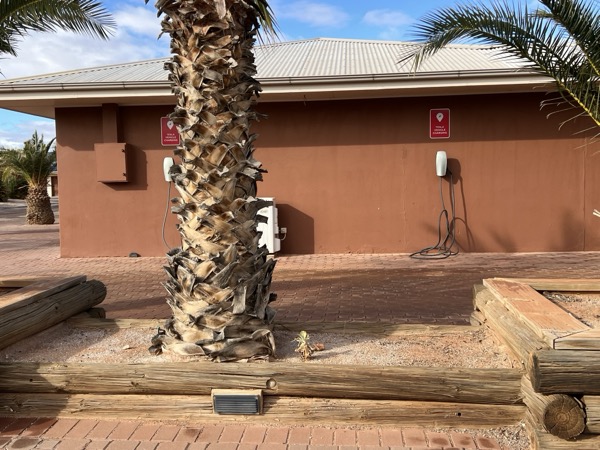
For our second night in Coober Pedy we swapped the campsite for a motel room at the same resort. Fran was unwell, and reception kindly changed the booking over for us without any fuss. The room looked out over the diggings to an old windmill standing in the red earth, which is about as Coober Pedy a view as you could ask for. We had a slow start the next morning and a sleep in, our first of the trip. The rooms sit at the other end of the grounds from the powered sites, behind a row of palms. The roof above them is packed end to end with solar panels, and on the wall below are two Tesla destination chargers, each with its own sign. I wondered whether we would use them. Then I looked up the price and did the arithmetic, and on the way out of town we drove down to the fast charger instead, which is its own short story. A shame, really, because a sleep in is exactly when a car should be charging, and that roof would have been making the electricity to do it.
-
 HQ
HQ
 HQ
HQ
 FB
FB
Sharing the Stuart Highway with a solar-powered prototype
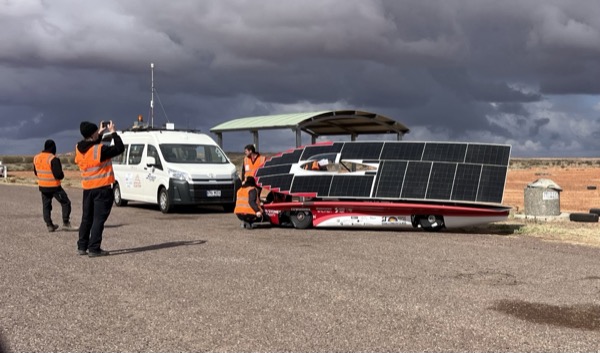
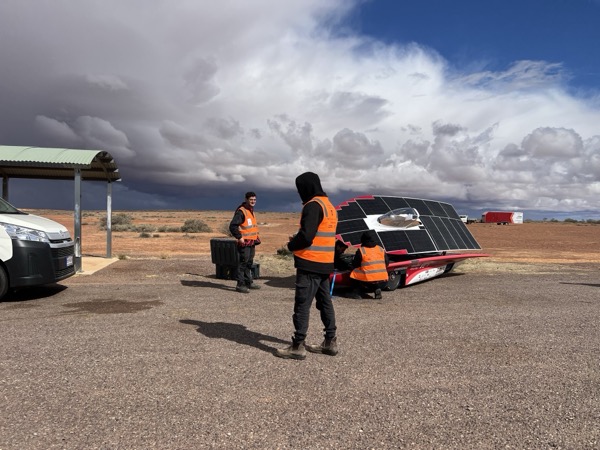
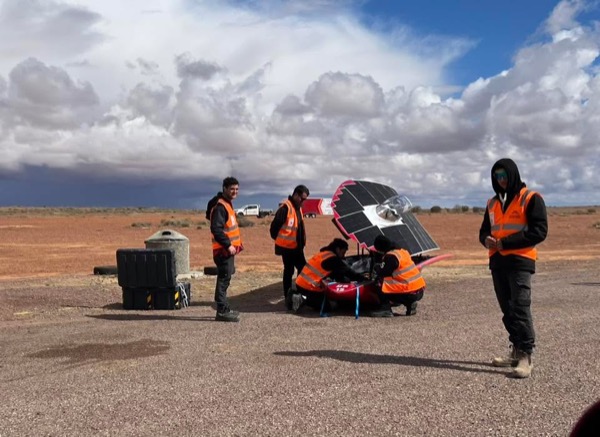
So, there we were, cruising along the Stuart Highway, in outback Australia, feeling like pioneers in our electric vehicle. Then we came across true pioneers, driving a solar powered prototype car. They were practicing for the Bridgestone World Solar Challenge, which runs from Darwin to Adelaide. They told us that they are only allowed to practice in South Australia, and not in the Northern Territory, so they had to travel south this far for a few weeks, then go all the way back to the start of the race. We ran into a few teams, including support vehicles with a StarLink dish on the roof, along the way, from various countries and universities. It seems that they test during the day, then typically set up camp overnight just off the highway. Big commitment to spend a few weeks in the Australian outback. Thank you for your research and development that filters through to a more sustainable future for transport.
-
 HQ
HQ
 HQ
HQ
 HQ
HQ
An hour underground at Tom's Opal Mine
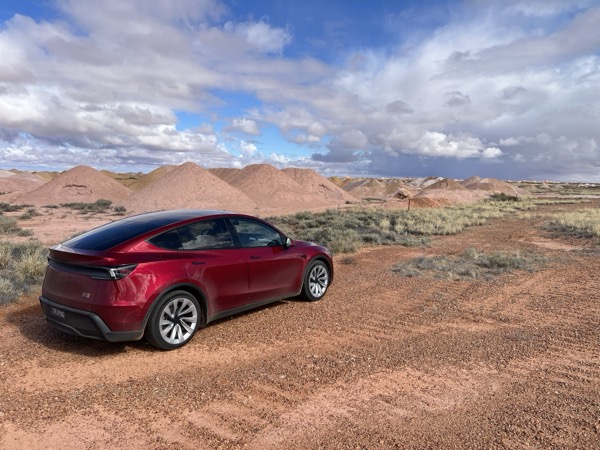
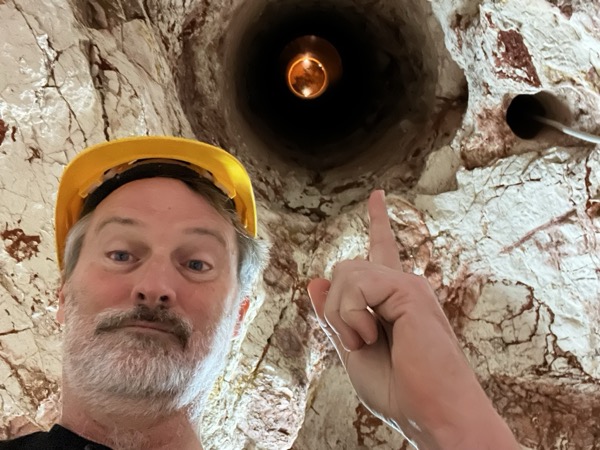
We took a tour of Tom's Opal Mine, on the Stuart Highway just out of town. Tom's mine was not mine. It is a genuine opal mine, worked through the eighties and nineties and now kept open for tours. Our guide was a real character, telling us a great deal about the mine and nearly as much about himself. We had hard hats; he had bare feet. As a fellow barefooter I was impressed, and a little alarmed on his behalf, in a working mine. He handed us each a black light, which is what miners use to pick opal out of the rock, and walked us through how a hole like this gets dug. Underground it was cool and still, which is the whole reason Coober Pedy lives below the surface. The digging is done by a blower, also called a sucker: really a truck parked on the surface with a wide pipe running down the shaft, working like an enormous vacuum cleaner. It draws the broken rock up the pipe and drops it into a hopper on the back. We watched the underground end of it pulling rock up the tube. Every mullock…
-
 HQ
HQ
 HQ
HQ
 HQ
HQ
Even the churches are underground
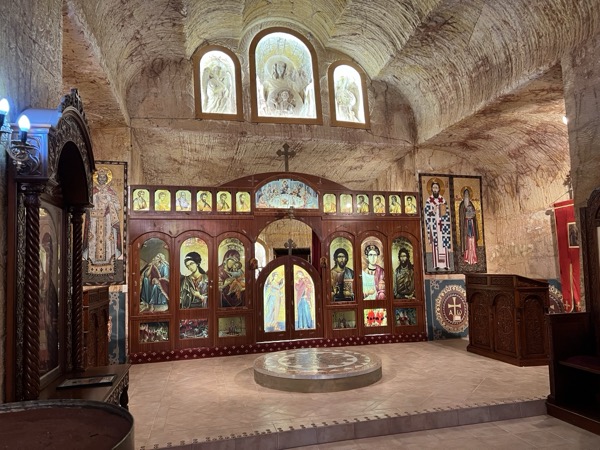
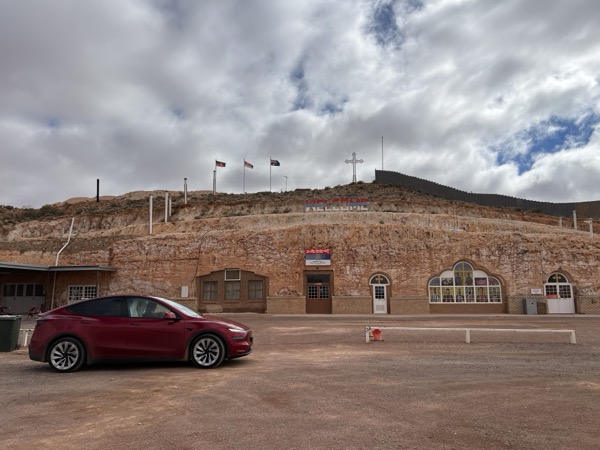
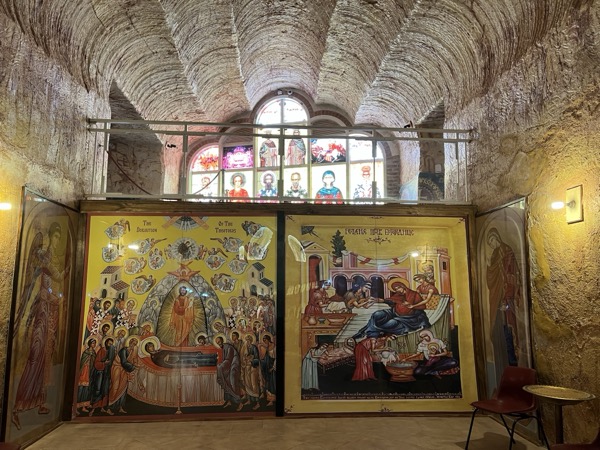
Coober Pedy deals with the heat by going underground, and once you notice it you cannot stop noticing it. Houses, shops, and the churches. The Serbian Orthodox church is cut straight into the rock. The ceiling is a row of carved scallops left by the machine that dug it, there is a stained glass window high on the end wall, and icons the size of doors stand against walls that are still visibly a mine face. Underground the temperature barely moves, so it was cool and still whatever the day was doing outside. The Catacomb Church up the road is plainer: a lectern carved from a tree trunk and an altar built on an old mine bucket. Then St Peter and St Paul, the Catholic one. Inside, rows of chairs face an altar set into the rock, with statues in carved niches on either side. Three churches in one small town, and every one of them dug rather than built.
-
 HQ
HQ
 HQ
HQ
 HQ
HQ
Car camping in Coober Pedy at 3°C
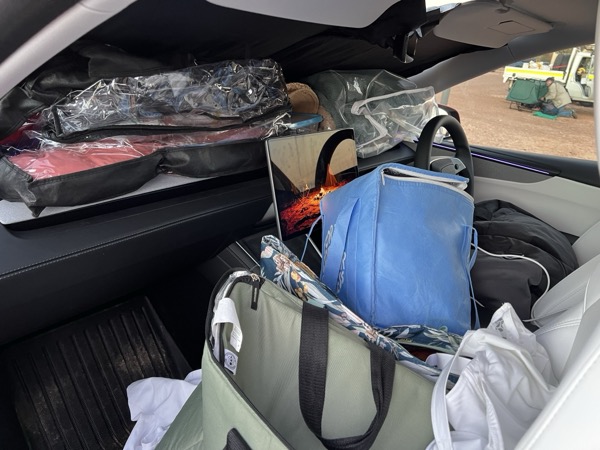
Coober Pedy was our first car camping stop on this trip, with Uluru still two days up the road. A powered site at the BIG4 Stuart Range Outback Resort, and the Snuuzu mattress in the back of the Model Y. The rear seats fold flat, except that folded flat is not flat. They sit at an angle, and a few hours of quietly hoiking yourself back up the slope is its own special kind of tired. The Snuuzu mattress is genuinely comfortable and it flattens the kink where the seats meet, but it does not fix the slope, and if anything it makes it slightly worse. We tried backing up a rise to lift the rear a little, then gave in and used the levelling ramps we had bought a few days earlier. Making the bed also means everything else has to go somewhere, so the bags end up stacked across the front seats and piled over the dash. Warm all night, right up until nature called. "Siri, open the Tesla boot" is a fine piece of technology until it opens your bedroom to the desert. We shuffled out half asleep into…
-
 HQ
HQ
 HQ
HQ
 HQ
HQ
A ute with a 200 L extra fuel tank, vs our EV
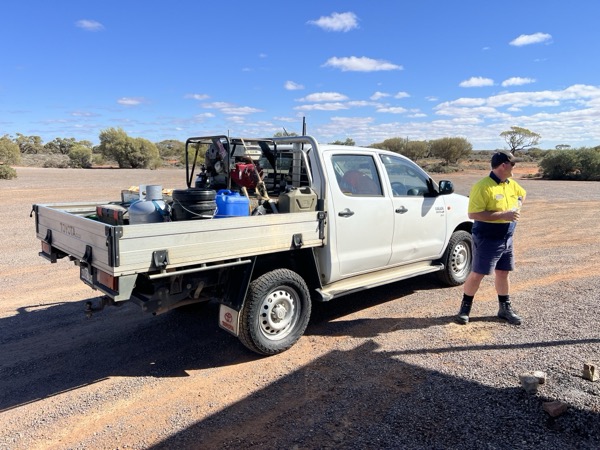
Chatted with Dan, at one of the rest stops along the Stuart Highway, heading towards Uluru. His ute has a range of about 430km, similar to a Tesla EV long range. To solve his range anxiety, and the high cost of fuel further north, he carries an additional 200L tank in the ute’s tray, along with a nozzle and electric pump. He pulled over here to top up the main tank. We chatted about EVs, including the BYD Shark ute that has an EV only drive, along with a battery and petrol generator, and new EV models that are approaching 1000km range. Interesting times ahead.
-
 HQ
HQ
 HQ
HQ
 HQ
HQ
The toughest range leg: Pimba to Coober Pedy
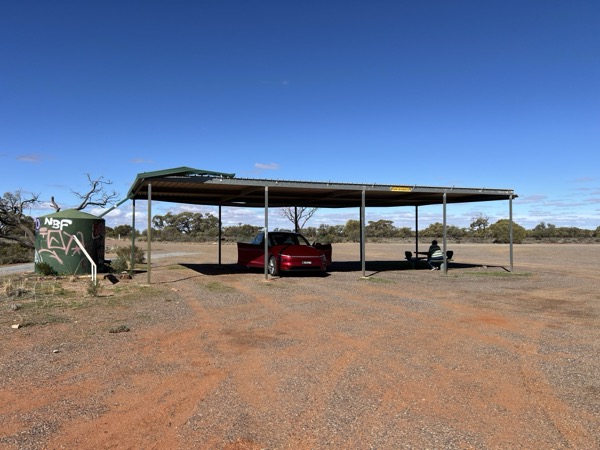
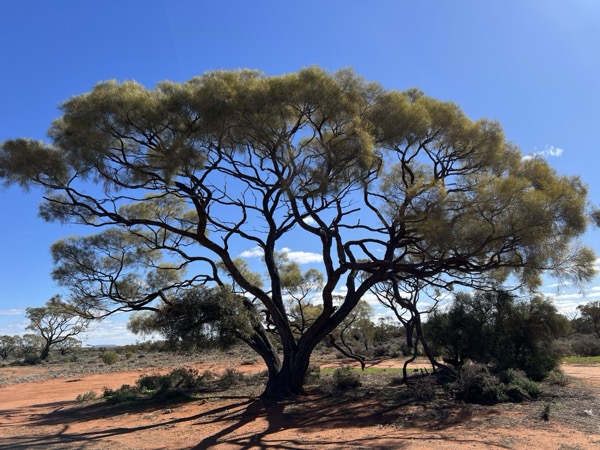
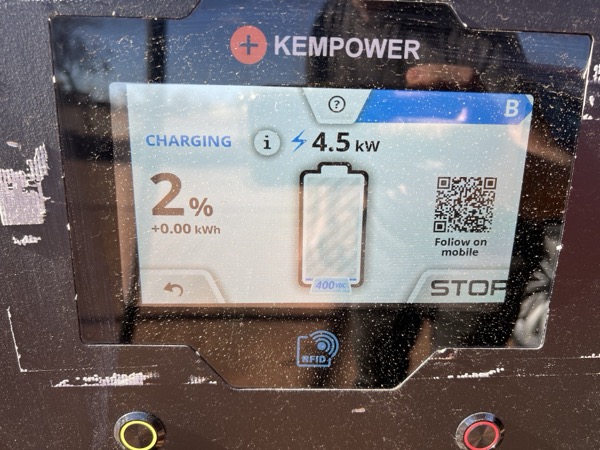
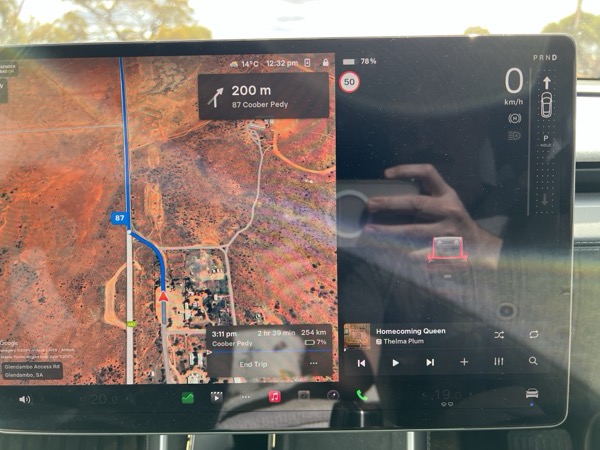
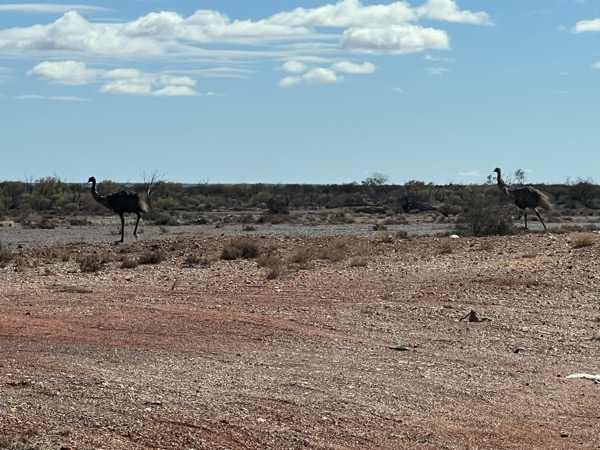
In terms of range, this was the toughest leg of our trip, from Pimba to Coober Pedy, along the Stuart Highway. Arid, but beautiful landscape, which just goes on and on. We spotted a few emus, passed a road train or two, and drove along a section of highway designated as an emergency runway for the Royal Flying Doctor Service. We knew we were close to Coober Pedy when we saw signs warning that wanderers might fall down one of a million random holes, never to be seen again. We parked, plugged in, and walked across the road for a meal.
-
 HQ
HQ
 HQ
HQ
 HQ
HQ
A couple of days exploring Coober Pedy
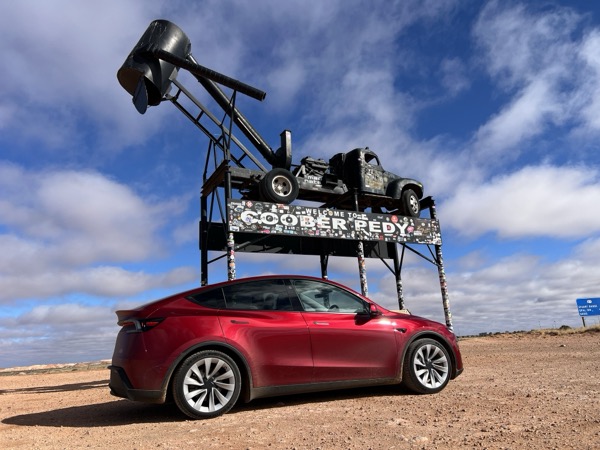
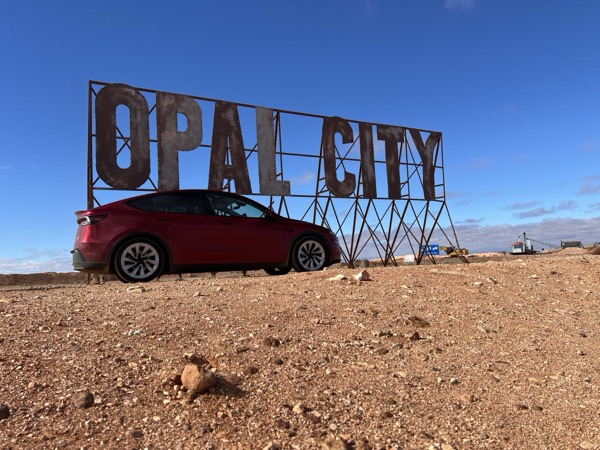
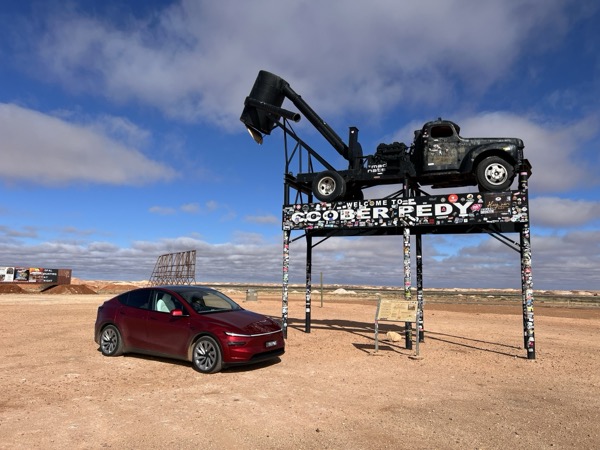
July 29-31: Grabbing some photo ops. More specific sites and posts to come.
-
 HQ
HQ
 HQ
HQ
 HQ
HQ
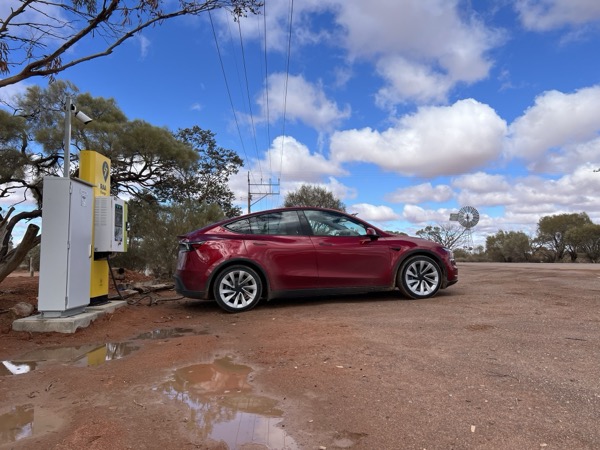
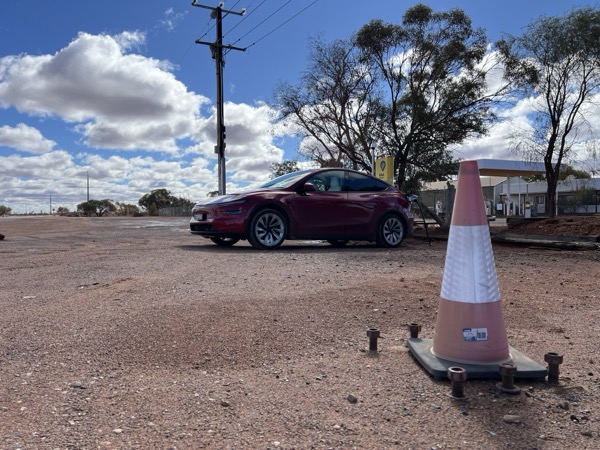
On our way to Coober Pedy — first Glendambo stop
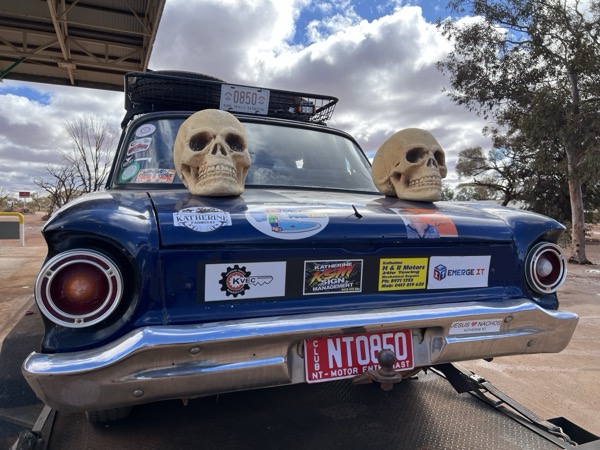
On our way to Coober Pedy, the plan was to stop here at the Glendambo Roadhouse for lunch and top up “fuel” for the car. Glendambo seems to consist of three main buildings: on the left, an old run down, decommissioned service station. In the middle, a roadhouse/pub, with access to motel rooms and camp ground behind. On the right, a newer service station with simple hot food options. I heard the service station staff saying that they had run out of diesel fuel, awaiting a delivery in an hour or two. A truckie reported to say he had thousands of litres parked outside, but he couldn’t give it up, since it was bound for Coober Pedy. If there’s no fuel, there’s no plan B. You just have to wait and hope. We chatted to one of the guys towing the rally car with skulls, appropriately named “Numb Skulls”. They’re headed from home in Katherine, NT south for the Variety Bash near Adelaide, then back home. That’s a lot of towing.
Formerly: Tesla Tripping
Come along on our EV road trips around Australia and Europe, and follow as we progressively electrify our home in Emerald, Victoria.
Join us on the road. We set off in late 2022 and drove eastern Australia in our Tesla Model 3 — Sydney, Dubbo, Armidale, Brisbane, Cape Tribulation, then down through Queensland and back. We've since upgraded to a Model Y.
We've kept exploring — Uluru, the Snowy Mountains and Gippsland, and a longer run through Europe in 2024. There's plenty more on the map, so come along for the next leg.
At home in Emerald, in Victoria's Dandenong Ranges, we're progressively electrifying everything: rooftop solar, a home battery, a hot water heat pump, air conditioned heating and cooling, and EV charging straight from the sun. We're going fully electric, off the gas.
Got questions, or insights of your own? We'd love to hear them — please drop a comment on any post.